The The LG GW520 also features LG's LiveSquare, which shows your favorite
Tuesday, December 1, 2009
LG GW520

Nokia 5230
The Nokia 5230 features an easy to use The innovative Contacts bar features thumbnail images for up to 20 close friends and provides easy access to them and their communications history including emails, phone calls, photos or other social media updates
The Nokia 5230 is designed for those who lead an

Friday, November 27, 2009
Nokia X6

We'd be tempted to use the word "featurephone" on the X6 (pictured) if it wasn't Nokia behind the handset, pumping the relatively chubby 0.55-inch thick form factor with 32GB of storage, a 5 megapixel camera, a dual LED flash, TV-out, and a 3.2-inch touchscreen. The phone is also a Comes with Music only handset, so don't expect to get all boring and old with this phone in your pocket -- or to pay for a voice plan that doesn't include the service. Otherwise, the phone seems to be a slightly slimmed down Nokia 5800 XpressMusic, sporting the same OS, A-GPS (with Ovi Maps), and we suppose a similar resistive touchscreen. Nokia was kind enough to include a free copy of Spore along with the Ovi Store, and plans to ship the handset in Q4 2009 for 459 Euros (about $652 US) before subsidy.
The X3 is a much tamer affair than the X6, offering a 2.2 non-touchscreen, a slide-out keypad, and Series 40 for an OS. There's a 3.2 megapixel camera, but you'll have to spring for a microSD card if you need significant onboard storage. What's new is that the X3 is the first Series 40 handset to include the Ovi Store, which should help it edge out the competition when it comes to functionality. The price isn't bad either, at 115 Euros (about $163 US) before subsidy. It'll be out in Q4 as well.
Update: We've added a brief video after the break.
Tuesday, November 24, 2009
LG BL20

For all its good looks and lickable icons, the BL40 hardly feels like a "Chocolate" phone -- abandoning the featurephone functionality and slider form factors that are usually associated with the moniker. Well, the newly surfaced BL20 (previously spotted as the BL42) is here to solve all that. The slider handset has capacitive touch controls below the screen, but the screen itself is not a touchscreen. The functionality has also been trimmed back from the BL40's app extravaganza, but the interface looks and actual hardware seem very similar. We had a little trouble getting around in the German interface, but if you can handle our bumblings you can check out a video of the phone after the break.
Monday, November 23, 2009
Sony Ericsson XPERIA X2
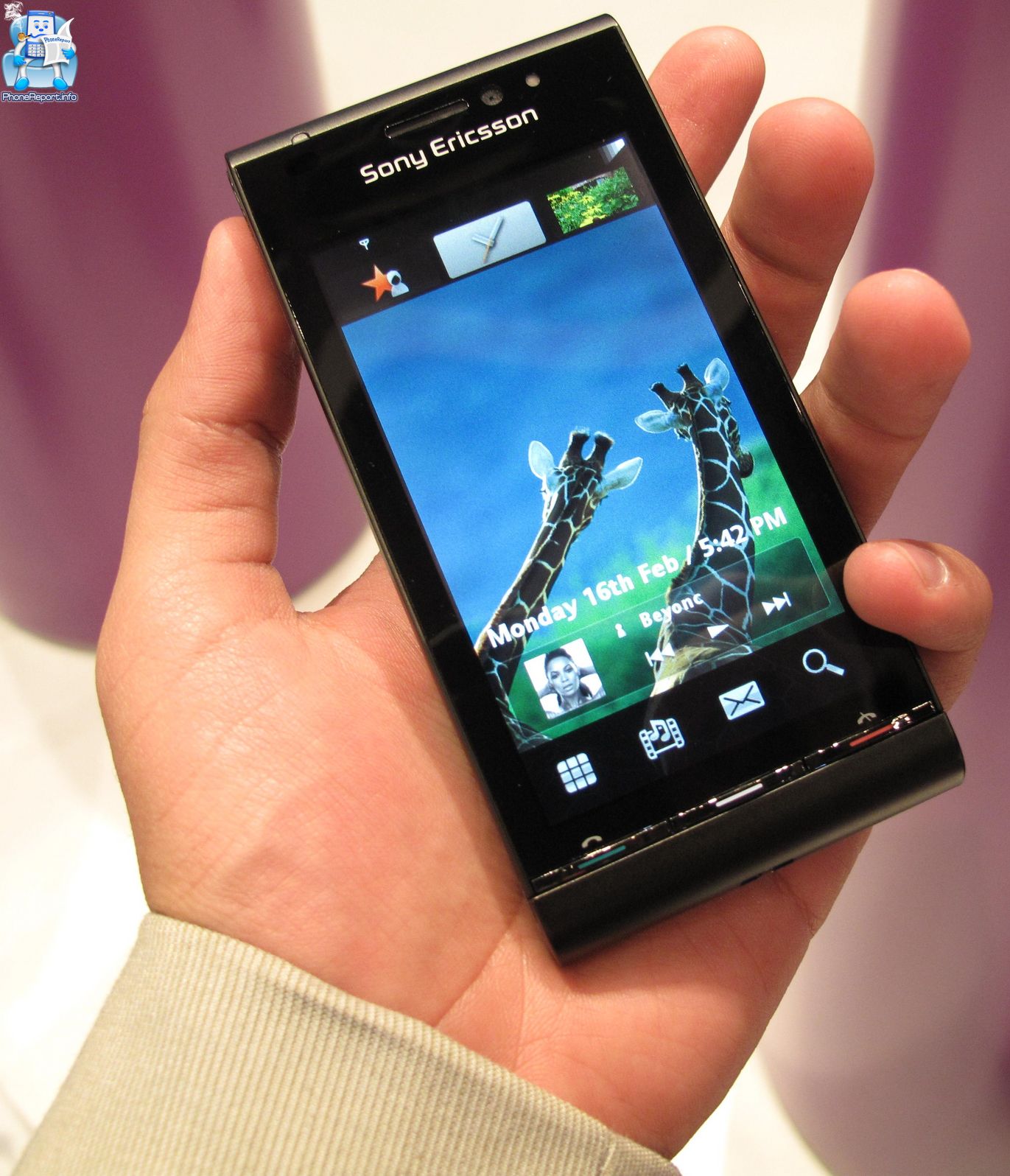
Live life in the fast lane with the XPERIA™ X2 from Sony Ericsson. Designed for those who always need to be connected, whether it’s for business or personal life, the XPERIA™ X2 blurs the boundary between work and play.
London, UK – September 2, 2009 – Today Sony Ericsson announces the XPERIA™ X2 a new Windows® phone that offers a best in class email and multimedia experience. In the modern world where 24/7 communication is key, users can instantly synchronise their mail and calendar and open and edit Microsoft® Office Mobile documents quickly and efficiently to stay connected with colleagues wherever they are.
The XPERIA™ X2 also includes the unique SlideView feature, which provides quick access to frequently used phone activities. Providing quick interaction with contacts, messages, media and more, SlideView gives an overview of missed incoming activity, notifying the user of any missed calls, e-mails and text messages so users don’t overlook an important contact.
With 14 specially designed preloaded XPERIA™ panels and 16 more to download, users can work with no boundaries with the XPERIA™ X2. From Skype, Mytopia and Google™, to games, CNN and Windows Live™, the panels ensure users are up-to-date with what matters most to them. With an improved touch interface and new 3D signature panel users also benefit from flexible desktop panels designed to categorise business, fun and communication features. Just set favourites to appear during certain times of the day and can get the latest news in the morning, YouTube™ at lunchtime and games for the journey home.
Powered by QWERTY messaging, Windows Mobile® users can even show their presentations on the big screen with the TV out cable - the XPERIA™ X2 makes a day at the office a walk in the park.
“In the fast moving world we live in, the need to stay connected has never been so important.” said Sumit Malhotra, marketing business manager, Sony Ericsson. “We constantly rely on our mobile phones as an extension to the office and the XPERIA™ X2 debuting with Windows Mobile® 6.5, allows users to work quickly and efficiently while on the move. The XPERIA™ X2 also features a new range of interactive panels as well as SlideView, which provides quick access to frequently used phone activities – perfect for those who need to see any missed incoming activity at a glance.”
Entertainment is not compromised on XPERIA™ X2. Enjoy amazing multimedia with the 3.2” high resolution touch screen and DVD quality and take advantage of the 8.1 megapixel camera to capture and instantly share experiences with friends and family. Personalise the panels and users can access Facebook™ to upload their party or holiday images and they can chat with friends across the world via Skype. Whether it is music, photography, email, video or gaming the XPERIA™ X2 has it all.
“Windows® phones allow people to manage their whole world – from work to home to play – on a single handset,” said Stephanie Ferguson, general manager, product management, Microsoft Corp. “The XPERIA™ X2 taps the powerful messaging and multimedia capabilities in Windows Mobile® so customers can be in touch, productive and entertained wherever they are.”
With the need to stay connected 24/7 Sony Ericsson has designed XPERIA™ Services, a bespoke and unique after sales package designed to help XPERIA™ X2 users get the most out of their mobile phone. With a specialised technical team standing by to support busy users and talk through the outstanding features the XPERIA™ X2 has to offer users can get help from troubleshooting to how to access their favourite websites. And if their XPERIA™ X2 stops working while they are abroad, XPERIA™ Services can replace the mobile phone via a simple phone call.
XPERIA™ Services really has been devised with the consumer in mind and to help consumers discover more about their XPERIA™ X2.
XPERIA™ X2
Live life without boundaries
- Windows Mobile® 6.5 – work on the move easier
- Make the most of the day – flexible desktop panels categorised for life: communication and fun, multimedia, business and internet
- Work without boundaries – instant synchronisation of mail, calendar powered by QWERTY keyboard messaging and Windows Mobile®
- Slide view – quick access to frequently used phone activities and overview of missed incoming activity
- Present documents on the big screen – TV out cable
- Never get stranded - XPERIA™ exclusive travel insurance
- Enjoy amazing multimedia – 3.2” high resolution touch screen and DVD quality
- 8.1 mega pixel camera with Photo light – easily upload images to web albums
- Real 3D panel – 3D effects and zoom, music playback controls
Big business meeting? Arrive charged with the Car Charger AN300 – ultra fast, ultra-safe and ultra-reliable. A perfect accessory for the XPERIA™ X2, it charges 40 per cent faster than most car chargers – just plug into the cigarette lighter and go.
XPERIA™ X2 supports GSM/GPRS/EDGE 850/900/1800/1900 and UMTS/HSPA 850/900/2100. XPERIA™ X2 will be available in selected markets from early Q4 in the colours Elegant Black and Modern Silver.
The Sony Ericsson XPERIA™ X2 at a glance
XPERIA™ X2
Camera
- 8.1 megapixel camera
- Up to 16x digital zoom
- Auto focus
- Geo tagging
- Image stabilizer
- Send to web
- Touch focus
- Video light
- Video recording
Music
- Album art
- Bluetooth™ stereo (A2DP)
- Equalizer
- Sony Ericsson media player
- Music tones (MP3/AAC)
- Equalizer
- Sony Ericsson media player
- Music tones (MP3/AAC)
- PlayNow™ arena*
- Stereo speakers
- Windows Media® Player
Web
- Bookmarks
- Google™ search
- Internet Explorer®
- Pan & Zoom
- Web feeds
Communication
- Call list
- Conference calls
- Polyphonic ringtones
- Speakerphone
- Vibrating alert
Messaging
- Microsoft® Exchange ActiveSync®
- Handwriting recognition
- Instant messaging
- Picture messaging (MMS)
- Predictive text input
- Text messaging (SMS)
Design
- Auto rotate
- Media
- Picture wallpaper
- Touchscreen
- Wallpaper animation
- Windows Mobile® 6.5
Entertainment
- 3D games
- Java™
- Motion gaming
- Tracker
- Video streaming
- Video viewing
- YouTube™ application
Connectivity
- A-GPS
Bluetooth™ technology
- DNLA Certified™
- Google Maps™
- Modem
- Synchronisation
- TV out
- USB mass storage
- USB support
- Wi-Fi™
Organizer
- Adobe® PDF Reader
- Alarm clock
- Calculator
- Calendar
- Flight mode
- Microsoft® Office Mobile
- Notes
- Phone book
- Stopwatch
- Tasks
- Timer
Accessories
In-Box:
- XPERIA™ X2
- Battery
- Battery Charger
- Stereo Portable Handsfree MH500
- USB cable
- TV out cable
- 4GB SanDisk microSD™ memory card
- User guide
Optional accessories:
- Bluetooth™ Headset PV740
- Car charger AN300
- Video Viewing Stand IM920
Facts and Figures 1)2)
- Size: 110 x 54 x 16 mm
- Weight: 155 grams
- Colours: Elegant Black, Modern Silver
- Main screen: 65,536 colour TFT
- Resolution: 480 x 800 pixels (WVGA)
- Size: 3.2 inches
- Phone memory: Up to110MB
- Memory card support: SanDisk microSD™ and microSDHC™, up to 16GB
- Talk time GSM: Up to 10 hrs
- Standby time GSM: Up to 500 hrs
- Talk time UMTS: Up to 6hrs
- Standby time UMTS: Up to 640hrs
- Music listening time: Up to 20hrs
Availability and versions
Networks:
- XPERIA™ X2
- GSM/GPRS/EDGE 850/900/1800/1900
- UMTS/HSPA 850/1900/2100
- GSM/GPRS/EDGE 850/900/1800/1900
- UMTS/HSPA 900/1900/2100
Legal
1) Facts and features may vary depending on local variant.
2) Talk and standby times are affected by network preferences, type of SIM card, connected accessories and various activities e.g. games. Kit contents and colour options may differ from market to market. The full range of accessories may not be available in every market.
© Sony Ericsson Mobile Communications AB, 2009.
The Liquid Identity logo, PlayNow and TrackID and are trademarks or registered trademarks of Sony Ericsson Mobile Communications AB. Sony is a trademark or registered trademark of Sony Corporation.
Ericsson is a trademark of Telefonaktiebolaget LM Ericsson.
The Bluetooth word mark and logos are owned by the Bluetooth SIG, Inc. and any use of such marks by
Sony Ericsson is under licence.
TrackID is powered by Gracenote Mobile MusicID. Gracenote and Gracenote Mobile MusicID are trademarks or registered trademarks of Gracenote, Inc.
Google, Google Maps and YouTube are trademarks or registered trademarks of Google, Inc.
Wi-Fi is a trademark or registered trademark of the Wi-Fi Alliance.
microSD is a trademark or registered trademark of SanDisk Corporation.
XHTML is a registered trademark of the W3C.
Microsoft, Windows, Windows Mobile, Excel, PowerPoint, Windows Live, Outlook, Internet Explorer, Windows Media and ActiveSync are either registered trademarks or trademarks of Microsoft Corporation in the United States and/or other countries.
Adobe and Flash Lite are trademarks or registered trademarks of Adobe Systems Incorporated in the United States and/or other countries.
SyncML is a trademark or registered trademark of Open Mobile Alliance Ltd.
Java and all Java based trademarks and logos are trademarks or registered trademarks of Sun Microsystems, Inc. in the U.S. and other countries.
Facebook is a trademark or registered trademark of Facebook, Inc.
Skype is a trademark or registered trademark of Skype Limited.
CNN is a trademark or registered trademark of Cable News Network, LLP.
All other trademarks and copyrights are the property of their respective owners.
Sony Ericsson is a top, global industry player with sales of around 97 million phones in 2008. Diversity is one of the core strengths of the company, with operations in over 80 countries including manufacturing in China and R&D sites in China, Europe, India, Japan and North America. Sony Ericsson was established as a 50:50 joint venture by Sony and Ericsson in October 2001, with global corporate functions located in London.
Wednesday, January 7, 2009
Review of the Garmin Nuvi 880 High-Powered GPS
The Garmin Nuvi 880 GPS Navigation System offers a comprehensive list of features and functions that boost it to the top tier for any person who wants a top quality GPS system. The system is somewhat operated by voice and also works using the touch screen. The Garmin Nuvi 880 is among the most popular GPS systems on the market today.
Features
The Garmin Nuvi 880 provides several features that cause it to be one of the most high quality GPS systems around. The unit will be armed with wireless abilities, allowing you to communicate through the cell phone even when driving. There are two front speakers positioned on the unit so that you can hear the person you are conversing with easily.
The Nuvi 880 also offers you excellent voice recognition capabilities. This hands-free function is the best option when you are zipping along congested highways and in cities where you have to put all of your attention on your route. The FM radio transmitter is also a standard feature and you can get real time traffic updates if you request them.
Traffic updates are spoken using your sound system so if you are hearing an MP3 on your Garmin Nuvi 880, the music will be interrupted by the instructions. This helps give you confidence that you will not drive past your turn and that new routes will automatically be at your disposal.
The Garmin Nuvi 880 Automotive GPS Navigator also gives simple-to-follow instructions by referring to the street names instead of the distance you must travel. The voice system is simple to operate and comprehend, especially since all you have to do is key in the end point and the address from which you are beginning your drive to use the system.
Charging Your Nuvi 880
You Nuvi 880 is easily removed so that you can take it anywhere. The battery will hold a charge even away from an outside power source for up to five hours. To power up your Nuvi 880 you can plug it into a cigarette lighter adaptor, your USB cable, or a garden-variety wall socket adaptor.
Adding Maps
The Garmin Nuvi 880 GPS Navigation System comes with maps of North America built in but you can get extra instructions when you want to by downloading the desired routes from the company website. If you are visiting a hitherto unknown country then you might also want to get a travel guide for the location you are visiting. The travel guide will make it easy to discover neat things to do in the country and help you get to hotels, fuel and other must-haves.
You can save your most well-liked restaurants and ships in the unit, also. This helps you to easily find your favorite foods and items in a new place.
Finding Parking
If you can never remember the location of your vehicle once you have parked, you will really appreciate the feature that keeps track of your parking spot. This benefit is guaranteed to be on your Garmin 880.
Features
The Garmin Nuvi 880 provides several features that cause it to be one of the most high quality GPS systems around. The unit will be armed with wireless abilities, allowing you to communicate through the cell phone even when driving. There are two front speakers positioned on the unit so that you can hear the person you are conversing with easily.
The Nuvi 880 also offers you excellent voice recognition capabilities. This hands-free function is the best option when you are zipping along congested highways and in cities where you have to put all of your attention on your route. The FM radio transmitter is also a standard feature and you can get real time traffic updates if you request them.
Traffic updates are spoken using your sound system so if you are hearing an MP3 on your Garmin Nuvi 880, the music will be interrupted by the instructions. This helps give you confidence that you will not drive past your turn and that new routes will automatically be at your disposal.
The Garmin Nuvi 880 Automotive GPS Navigator also gives simple-to-follow instructions by referring to the street names instead of the distance you must travel. The voice system is simple to operate and comprehend, especially since all you have to do is key in the end point and the address from which you are beginning your drive to use the system.
Charging Your Nuvi 880
You Nuvi 880 is easily removed so that you can take it anywhere. The battery will hold a charge even away from an outside power source for up to five hours. To power up your Nuvi 880 you can plug it into a cigarette lighter adaptor, your USB cable, or a garden-variety wall socket adaptor.
Adding Maps
The Garmin Nuvi 880 GPS Navigation System comes with maps of North America built in but you can get extra instructions when you want to by downloading the desired routes from the company website. If you are visiting a hitherto unknown country then you might also want to get a travel guide for the location you are visiting. The travel guide will make it easy to discover neat things to do in the country and help you get to hotels, fuel and other must-haves.
You can save your most well-liked restaurants and ships in the unit, also. This helps you to easily find your favorite foods and items in a new place.
Finding Parking
If you can never remember the location of your vehicle once you have parked, you will really appreciate the feature that keeps track of your parking spot. This benefit is guaranteed to be on your Garmin 880.
About the Author:
Joseph Aaron writes for an online project helping consumers make educated purchase decisions on GPS Navigation Systems. Amongst the highest rated GPS units recommended on his website is the Garmin Nuvi 880 GPS Navigation System.
Sunday, January 4, 2009
The Advantages of a Cell Phone with GPS
Global positioning technology has evolved extensively over the years, and the benefits seen from the commercialization of GPS for consumer use is widespread. Although this revolutionary technology was originally developed for the military, it has enjoyed more success in the consumer market.
Phones that are equipped with GPS are known as GPS cell phones. With these phones, you can use GPS whenever you want, not just in a car like with other devices. The best cell phones on the market now come standard with GPS, and it is probable that eventually all phones will have GPS.
The alternative to a GPS cell phone is a regular GPS system, but there are some distinct disadvantages of these. For one, they are too large to take outside of your car. Second, they are quite expensive, and currently the cheapest model is still around two hundred dollars. Therefore, GPS cell phones save money because then you no longer need an additional system.
In emergencies, GPS is something you will always be thankful for. You can use it to find a gas station or a town in close proximity if lost. You can also give emergency personnel, family, or friends your specific location with the aid of global positioning.
It can sometimes be difficult for a cell phone to be tracked in certain situations. With a GPS cell phone, police can quickly find you no matter what the circumstances are, and that is quite a relief, even if you don't need to use that service.
The primary benefit people think about when it comes to GPS is finding places without a map. Indeed, you will never need to look at a map again if you have a quality GPS cell phone. All you need to do is type in the address you are going to, and step-by-step directions are instantly created for you to follow.
Unfortunately for kids, GPS can be used by parents to track their location. Teens don't even need to be notified; parental units can activate GPS without the offspring ever knowing. However, doing such a thing is considered unethical, so if a parent chooses to use this feature, they should tell whoever is being tracked.
The ever increasing efficiency of the technological industry will soon make GPS available to almost everyone who owns a cell phone. The days of getting lost in the deserts of Arizona or the mountains of Colorado will be long gone, and people will be able to feel a little bit safer while driving in to unknown territory.
Phones that are equipped with GPS are known as GPS cell phones. With these phones, you can use GPS whenever you want, not just in a car like with other devices. The best cell phones on the market now come standard with GPS, and it is probable that eventually all phones will have GPS.
The alternative to a GPS cell phone is a regular GPS system, but there are some distinct disadvantages of these. For one, they are too large to take outside of your car. Second, they are quite expensive, and currently the cheapest model is still around two hundred dollars. Therefore, GPS cell phones save money because then you no longer need an additional system.
In emergencies, GPS is something you will always be thankful for. You can use it to find a gas station or a town in close proximity if lost. You can also give emergency personnel, family, or friends your specific location with the aid of global positioning.
It can sometimes be difficult for a cell phone to be tracked in certain situations. With a GPS cell phone, police can quickly find you no matter what the circumstances are, and that is quite a relief, even if you don't need to use that service.
The primary benefit people think about when it comes to GPS is finding places without a map. Indeed, you will never need to look at a map again if you have a quality GPS cell phone. All you need to do is type in the address you are going to, and step-by-step directions are instantly created for you to follow.
Unfortunately for kids, GPS can be used by parents to track their location. Teens don't even need to be notified; parental units can activate GPS without the offspring ever knowing. However, doing such a thing is considered unethical, so if a parent chooses to use this feature, they should tell whoever is being tracked.
The ever increasing efficiency of the technological industry will soon make GPS available to almost everyone who owns a cell phone. The days of getting lost in the deserts of Arizona or the mountains of Colorado will be long gone, and people will be able to feel a little bit safer while driving in to unknown territory.
About the Author:
Justin Kander blogs for Cheap Electrforics Warehouse, a blog dedicated to cheap electrforics.
Tuesday, December 30, 2008
Review of the Forerunner 205
If you are a professional athlete, you will always certainly benefit from the Garmin Forerunner GPS 201 watch. It has a striking array of functions to offer. It contains a GPS sensor, an electronic map, session change and reversal capabilities, calorie tracker, lap info and information, performance archives, auto stopwatch with auto-lap and auto pause features, lap timer, pace alert, distance alert, free Training Center software, a bendy wristwatch strap, and an A/C desktop charging unit with a serial port.
The GPS 201 is the best choice for a professional as well as a more casual athlete. It mainly works to help you manage the rate and tracking facets of a workout. This device provides quite a number of advantages, but its major flaw is that it does not work predictably. This is the only reason you would not consider it excellent. Its dimensions of 3.3 ? 1.7 ? 0.7 make it appear more bulky than a normal fitness watch; in fact it is lighter than it looks, as it weighs only 2.8 ounces. The watch is safe for use in water and hence it may be worn by swimmers or by sports participants in rainy or wet weather conditions.
The GPS 201 can store a lap record history of up to 5000 laps and offers many more features that you should tinker with to match up with your own demands and personal requirements. One of the most important features the watch provides is the Training Center Software. This is the perfect feature for you to use to save your performance statistics and can also help you see ways in which they have varied along your path, particularly if you have worked out at different elevations. The Virtual Partner component helps you set goals that you want to reach. You simply have to compare your actual workout session with that of your virtual partner.
The GPS function of this 201 model is put down by many users because the signal can be fickle at times. In addition to that, they also tend to find fault with the irregularities in components such as altitude and pace readings. This model does not have a heart rate monitor. Currently, when most of the computer interfaces can work with a USB, this model falls to the back of the pack with a serial port facility.
The wristband of the Forerunner 201 GPS Fitness Watch is stretchy, enabling you to wear the watch by wearing it on your wrist or your bicep as you choose. Its LCD display screen is a joy to view in well-lit conditions as well as in the shadows. The rechargeable lithium alloy battery can remain charged for 14 hours before losing power. It appears to be just fine for runners, but may not be quite adequate for bicycling, etc.
Overall, the Garmin Forerunner GPS 201 is a watch with a lot of benefits. The training Center software and the Virtual partner features warrant special mention. Ultimately, its patchy GPS signaling is its only flaw.
The GPS 201 is the best choice for a professional as well as a more casual athlete. It mainly works to help you manage the rate and tracking facets of a workout. This device provides quite a number of advantages, but its major flaw is that it does not work predictably. This is the only reason you would not consider it excellent. Its dimensions of 3.3 ? 1.7 ? 0.7 make it appear more bulky than a normal fitness watch; in fact it is lighter than it looks, as it weighs only 2.8 ounces. The watch is safe for use in water and hence it may be worn by swimmers or by sports participants in rainy or wet weather conditions.
The GPS 201 can store a lap record history of up to 5000 laps and offers many more features that you should tinker with to match up with your own demands and personal requirements. One of the most important features the watch provides is the Training Center Software. This is the perfect feature for you to use to save your performance statistics and can also help you see ways in which they have varied along your path, particularly if you have worked out at different elevations. The Virtual Partner component helps you set goals that you want to reach. You simply have to compare your actual workout session with that of your virtual partner.
The GPS function of this 201 model is put down by many users because the signal can be fickle at times. In addition to that, they also tend to find fault with the irregularities in components such as altitude and pace readings. This model does not have a heart rate monitor. Currently, when most of the computer interfaces can work with a USB, this model falls to the back of the pack with a serial port facility.
The wristband of the Forerunner 201 GPS Fitness Watch is stretchy, enabling you to wear the watch by wearing it on your wrist or your bicep as you choose. Its LCD display screen is a joy to view in well-lit conditions as well as in the shadows. The rechargeable lithium alloy battery can remain charged for 14 hours before losing power. It appears to be just fine for runners, but may not be quite adequate for bicycling, etc.
Overall, the Garmin Forerunner GPS 201 is a watch with a lot of benefits. The training Center software and the Virtual partner features warrant special mention. Ultimately, its patchy GPS signaling is its only flaw.
About the Author:
Visit Joseph's website for reviews, ratings and great deals on the Garmin Forerunner 201 Fitness Watch.
How do GPS Systems Works?
Global Positioning Systems (known as GPS) like the Nuvi 350 are in thousands of cars, even as a standard feature. They have become quite portable and convenient to use and handheld models are more and more prevalent. But how do these little wonders work?
Well, first of all GPS stands for 'Global Position System' - 'Global' meaning worldwide and 'Positioning' meaning where on the globe your position is. The way it actually figures out where on the globe you are is pretty fascinating.
Working off of twenty-four satellites in orbit around Earth, the Nuvi 350 GPS will triangulate your position through transmissions from these satellites to your personal device. To get the accurace of your position, the satellites and the GPS need a very accurate time - atomic clocks at the United States Naval Observatory are what gives the clocks their precise time as the Observatory uploads this information to all of the satellites in the GPS satellite network.
The receiver in the Nuvi 350 knows the location of each satellite as this information is constantly being monitored by the GPS. When the signals from the satellites are received by the GPS, it will use 'triangulation' to determine your precise location. Where the signals intersect from each satellite is where you are. Armed with this information, the Nuvi 350 will give your position with an accuracy of 10 to 20 meters. At any given time, four of the satellites can be seen by a GPS as they are rotating around the earth.
The Nuvi 350 has a database of maps in its internal memory and because it always knows where its at, it can give you helpful travel tips and information, It can tell you how far you've traveled, how long you were on the road, how fast you've been traveling and your average speed. Oh yeah - and nearby stores, restaurants, banks and, a whole lot more.
The days of trying to figure out how to refold your road map are gone with the advent of the GPS. Travelers, soldiers, scouts, adventurers have much to benefit from owning a GPS. Hunters and hikers can use these devices, letting the old compass remain in their pockets. Sailors used to rely on the stars to navigate the waters and now the GPS can be put on that task. And your neighbors are using these every day to conveniently navigate around local traffic situations.
Now that's pretty impressive!
Well, first of all GPS stands for 'Global Position System' - 'Global' meaning worldwide and 'Positioning' meaning where on the globe your position is. The way it actually figures out where on the globe you are is pretty fascinating.
Working off of twenty-four satellites in orbit around Earth, the Nuvi 350 GPS will triangulate your position through transmissions from these satellites to your personal device. To get the accurace of your position, the satellites and the GPS need a very accurate time - atomic clocks at the United States Naval Observatory are what gives the clocks their precise time as the Observatory uploads this information to all of the satellites in the GPS satellite network.
The receiver in the Nuvi 350 knows the location of each satellite as this information is constantly being monitored by the GPS. When the signals from the satellites are received by the GPS, it will use 'triangulation' to determine your precise location. Where the signals intersect from each satellite is where you are. Armed with this information, the Nuvi 350 will give your position with an accuracy of 10 to 20 meters. At any given time, four of the satellites can be seen by a GPS as they are rotating around the earth.
The Nuvi 350 has a database of maps in its internal memory and because it always knows where its at, it can give you helpful travel tips and information, It can tell you how far you've traveled, how long you were on the road, how fast you've been traveling and your average speed. Oh yeah - and nearby stores, restaurants, banks and, a whole lot more.
The days of trying to figure out how to refold your road map are gone with the advent of the GPS. Travelers, soldiers, scouts, adventurers have much to benefit from owning a GPS. Hunters and hikers can use these devices, letting the old compass remain in their pockets. Sailors used to rely on the stars to navigate the waters and now the GPS can be put on that task. And your neighbors are using these every day to conveniently navigate around local traffic situations.
Now that's pretty impressive!
Amber Alert Gps Because Millions of Children are Lost Everyday
A parent's greatest fear is losing their child. Now there is a way to help calm that fear. Amber Alert Gps has created a product using the latest in GPS and cellular technology. The heart of the company, which is run by parents for parents, revolves around the President's initiative to protect children and give parents peace of mind.
The Amber Alert Gps is the leader in the US child location technology industry. Rated 4 out of 5 as the Editor's Choice by gsmagazine.com in their new "The Ultimate GPS Child Tracking Buyers's Guide and recently reviewed in MSNBC.com's article "A Good Find: GPS to locate the kids".
Here is how it works. A parent's phone call to a GPS unit, located on their child, will return a text within seconds to their cell phone containing the longitude and latitude coordinates of their child's whereabouts, along with a map pinpointing the location of their child.
This innovative technology also provides maps on your Mobile Phone. When you call your GPS to request a location, you will receive a map URL right back on your mobile phone. This will work if you have an Internet Data plan on your mobile phone or a Smart phone.
You will be able to define a Safe Zone area in your neighborhood, school district or any where you choose and receive an alert when your GPS is carried outside that location. You receive a SOS Button. You can teach your child to press the GPS SOS button when they need help and you will immediately receive an alert with their location.
You will receive a Speed Alert so you will get notification when your GPS surpasses a specific speed and know immediately when your child is in a car. This is great for speeding teenagers!
The Amber Alert GPS units are about the look and size of a pager. It will fit in any pocket, backpack, purse, or jacket. The second generation of units will be launched February of 2009 and can be pre-ordered now. This next generation will include a new wristband model and a new belt unit to make it even easier to place the GPS unit on your child. See our website for images of the current and future units.
You may use this device in many other scenarios, such as pet tracking, vehicle tracking, special needs children and seniors, luggage tracking, and more. Only your imagination limits the uses of this amazing and efficient new technology.
The Amber Alert Gps is the leader in the US child location technology industry. Rated 4 out of 5 as the Editor's Choice by gsmagazine.com in their new "The Ultimate GPS Child Tracking Buyers's Guide and recently reviewed in MSNBC.com's article "A Good Find: GPS to locate the kids".
Here is how it works. A parent's phone call to a GPS unit, located on their child, will return a text within seconds to their cell phone containing the longitude and latitude coordinates of their child's whereabouts, along with a map pinpointing the location of their child.
This innovative technology also provides maps on your Mobile Phone. When you call your GPS to request a location, you will receive a map URL right back on your mobile phone. This will work if you have an Internet Data plan on your mobile phone or a Smart phone.
You will be able to define a Safe Zone area in your neighborhood, school district or any where you choose and receive an alert when your GPS is carried outside that location. You receive a SOS Button. You can teach your child to press the GPS SOS button when they need help and you will immediately receive an alert with their location.
You will receive a Speed Alert so you will get notification when your GPS surpasses a specific speed and know immediately when your child is in a car. This is great for speeding teenagers!
The Amber Alert GPS units are about the look and size of a pager. It will fit in any pocket, backpack, purse, or jacket. The second generation of units will be launched February of 2009 and can be pre-ordered now. This next generation will include a new wristband model and a new belt unit to make it even easier to place the GPS unit on your child. See our website for images of the current and future units.
You may use this device in many other scenarios, such as pet tracking, vehicle tracking, special needs children and seniors, luggage tracking, and more. Only your imagination limits the uses of this amazing and efficient new technology.
About the Author:
Children Are Lost Everyday! Click Here To Learn About New GPS Child Location Device. No competitor has anything close to the sophistication of its technology and simplicity. Get a totally unique version of this article from our article submission service
Monday, December 29, 2008
Track the Trail: GPS Tracking
Almost all mobile phones now have access to a GPS system. However, many people do not activate the service. There should be a word of caution here. GPS locating systems are really for your own good and protection. Suppose you were on a hiking trip, you did have your cell phone with you, but the GPS system had never been activated; all of a sudden, you have an accident, and you need someone's help. If you had have activated your GPS system, all you would have to do is call 911, tell them what happened and they could track your location through your GPS signal.
Once a GPS tracking system has been activated, you can type in your location and the location that you want to go, and the system will give you a trajectory of how far it is, and which is the best way to go. When there is more than one person in your hiking party, each person should have a mobile phone with an activated GPS tracking signal, just in case one of the party members accidentally gets lost. They can call for help or they can track the rest of the members of their own party, and vice versa.
They are a very big help in helping you keep track of the children, no matter what age they are. You can even have a GPS system installed on your favorite pet's collar. Or you can have a GPS system installed in your children's shoes, or on their clothing. So no matter where they wonder off to you can always find them.
Many of the most idyllic places in the world can only be reached by hiking. Even going on horseback can sometimes come to an end as the terrain becomes too rough to continue on horseback. Although most hiking is very easy and nature trails have been posted for almost all of the parks around the world. Even the safest hiking trail can turn in to a disaster in no time at all. Bad weather could suddenly appear, or the sun could become hot enough that you may get severe sunburn. Or you could accidentally walk upon a wild animal, and instead of it running away, it charges toward you.
There are several items that should be taken with you as you head off on that long planned hiking trip to the mountains. The first item would be to take along at least two canteens full of water. The second item would be to carry a first aid kit with you. Third is to always take along enough food for at least two hours longer than you plan to stay. A flash light and extra batteries, and just in case you do not smoke, some matches in case you need to light a fire. Also include at least a small knife. Take along a camera and some extra film to capture those special moments and show them to your friends. Enjoy your time hiking, but one thing that every hiker should always do is to "leave the area better than you found it" always clean up the area so that others can see the beauty that you saw. And always remember to use your GPS system. There are so many advantage of having a GPS tracking system that it is astonishing that not everyone uses it.
Once a GPS tracking system has been activated, you can type in your location and the location that you want to go, and the system will give you a trajectory of how far it is, and which is the best way to go. When there is more than one person in your hiking party, each person should have a mobile phone with an activated GPS tracking signal, just in case one of the party members accidentally gets lost. They can call for help or they can track the rest of the members of their own party, and vice versa.
They are a very big help in helping you keep track of the children, no matter what age they are. You can even have a GPS system installed on your favorite pet's collar. Or you can have a GPS system installed in your children's shoes, or on their clothing. So no matter where they wonder off to you can always find them.
Many of the most idyllic places in the world can only be reached by hiking. Even going on horseback can sometimes come to an end as the terrain becomes too rough to continue on horseback. Although most hiking is very easy and nature trails have been posted for almost all of the parks around the world. Even the safest hiking trail can turn in to a disaster in no time at all. Bad weather could suddenly appear, or the sun could become hot enough that you may get severe sunburn. Or you could accidentally walk upon a wild animal, and instead of it running away, it charges toward you.
There are several items that should be taken with you as you head off on that long planned hiking trip to the mountains. The first item would be to take along at least two canteens full of water. The second item would be to carry a first aid kit with you. Third is to always take along enough food for at least two hours longer than you plan to stay. A flash light and extra batteries, and just in case you do not smoke, some matches in case you need to light a fire. Also include at least a small knife. Take along a camera and some extra film to capture those special moments and show them to your friends. Enjoy your time hiking, but one thing that every hiker should always do is to "leave the area better than you found it" always clean up the area so that others can see the beauty that you saw. And always remember to use your GPS system. There are so many advantage of having a GPS tracking system that it is astonishing that not everyone uses it.
About the Author:
If you are in the market for a powerful GPS tracking system, make sure you buy from a reputable GPS tracking manufacturer.
Sunday, December 28, 2008
Crazy Cabbies: GPS Tracking
Taxis, though long neglected or taken for granted, act as vehicles for hire, and transport people between locations of their choice for a fee. Unlike buses and trains, the passenger determines the pick up and drop off points, not the driver. There are four major kinds of taxicab, though they may not be called by these names, depending on location.
Hail a hackney carriage and get to where you need to be. Private hire vehicles are also available, and may be called minicabs. Private hire taxis are available only by pre-booking - you can't hire them on the street. Jitneys, or taxibuses, are a type of bus/taxicab hybrid that operate on preset routes like a bus. Limousines are also a kind of taxi, but are usually only available by pre-booking.
The customs and standards pertaining to taxi vary from country to country, and sometimes from city to city. The first hackney carriages started operating in the early seventeenth century in London and Paris. The first service we can document was started by a man called Nicolas Sauvage in Paris, and dates from 1640s. His vehicles were called fiacres, since the major vehicle depot in the city was near a shrine to St. Fiacre. In French, this term is still used to describe horse drawn carriages for hire. The Hackney Carriage Act was passed in London in 1635 and was the first legislated control on vehicles for hire in English. Eventually hansom cabs replaced older vehicles due to being faster and safer.
Taximeter set the taxi world on fire. This device, originally mechanical but now often electronic, calculates the fare in the cab. The first modern taxicab equipped with a meter was the Daimler Victoria, built in 1897. Gas powered taxicabs started operating in Paris in 1899, in 1903 in London, and in 1907 in New York. During the twentieth century, taxicabs became more and more common, partially due to the integration of two way radios into them in the 1940s. This worked more efficiently than the previous callbox method. In the 1980s, computer aided dispatching came into being, and was a significant innovation.
Though cabbies are expected to have a strong knowledge places, more and more taxicab companies are beginning to use GPS tracking in their vehicles. This augments the traditional printed map included in most taxicabs. Poorer countries generally still rely on the driver's memory and the map, since GPS is not always available. Despite the availability of this technology, some areas that have the option of using GPS tracking do not make use of it. London's black cab taxis, for instance, still rely on strict training of their drivers instead. Minicabs, on the other hand, are making use of this technology much more frequently.
Hail a hackney carriage and get to where you need to be. Private hire vehicles are also available, and may be called minicabs. Private hire taxis are available only by pre-booking - you can't hire them on the street. Jitneys, or taxibuses, are a type of bus/taxicab hybrid that operate on preset routes like a bus. Limousines are also a kind of taxi, but are usually only available by pre-booking.
The customs and standards pertaining to taxi vary from country to country, and sometimes from city to city. The first hackney carriages started operating in the early seventeenth century in London and Paris. The first service we can document was started by a man called Nicolas Sauvage in Paris, and dates from 1640s. His vehicles were called fiacres, since the major vehicle depot in the city was near a shrine to St. Fiacre. In French, this term is still used to describe horse drawn carriages for hire. The Hackney Carriage Act was passed in London in 1635 and was the first legislated control on vehicles for hire in English. Eventually hansom cabs replaced older vehicles due to being faster and safer.
Taximeter set the taxi world on fire. This device, originally mechanical but now often electronic, calculates the fare in the cab. The first modern taxicab equipped with a meter was the Daimler Victoria, built in 1897. Gas powered taxicabs started operating in Paris in 1899, in 1903 in London, and in 1907 in New York. During the twentieth century, taxicabs became more and more common, partially due to the integration of two way radios into them in the 1940s. This worked more efficiently than the previous callbox method. In the 1980s, computer aided dispatching came into being, and was a significant innovation.
Though cabbies are expected to have a strong knowledge places, more and more taxicab companies are beginning to use GPS tracking in their vehicles. This augments the traditional printed map included in most taxicabs. Poorer countries generally still rely on the driver's memory and the map, since GPS is not always available. Despite the availability of this technology, some areas that have the option of using GPS tracking do not make use of it. London's black cab taxis, for instance, still rely on strict training of their drivers instead. Minicabs, on the other hand, are making use of this technology much more frequently.
About the Author:
If you are interested in getting your hands on a GPS tracking system or device, be sure you by from a respected GPS manufacturer.
Saturday, September 22, 2007
Nokia E65


The good:
- Stylish design with great build quality
- Support for 3G, Wi-Fi and quadband
- Long-life battery
The bad:
- No second camera for voice calls
- No stereo headset
- No FM radio
The bottomline:
Easily one of the best looking handsets on the market with a good assortment of features including Wi-Fi, quadband support and Quickoffice, but the E65 is better suited to those after business chic rather than business geek.
It's rare these days for a mobile phone to impress us straight out of the box, but Nokia's latest addition to its E-series range proves that you can combine a fully functional business phone in a compact and attractive chassis. The E65 looks good and feels great, and is packed with enough features to lure both mobile professionals as well as the fashion conscious.
Design
The E65 marks a return to the stylish design of quality handsets such as Nokia's own 8800. Measuring in at just 105mm by 49mm by 15.5mm and weighing just 115 grams, the E65 is incredibly small given its list of features. Sliding the spring-loaded front panel upwards reveals a stylish keypad with well spaced buttons that have a solid feel. Push the slider down again and it snaps shut with a reassuring click.
The E65 includes several shortcut keys on its front for one-touch conference calls, muting and opening your contacts. There's also a "My Own" button you can program to load up your favourite application. Flip the handset over and you'll find a 2-megapixel digital camera surrounded by a leather-feel plastic surface. Strangely, for a 3G capable phone, the E65 lacks a second camera on the front panel for video calling.
The large 2.2-inch, 240 x 320 pixel display packs up to 16 million colours and comes with adjustments for the contrast and brightness. A sensor located below the power button can detect ambient light levels and adjusts the brightness of the keypad accordingly to save battery life. In the box you'll find a 256MB microSD card, connectivity cable, travel charger, carrying pouch and a mono headset.
Features
The E65 comes equipped with every connectivity feature you could ever need. There's support for quadband GSM, 3G, Wi-Fi (802.11b/g with VoIP support), EDGE, USB, infrared and Bluetooth version 1.2. Nokia has stuck with the S60 Symbian operating system, and this latest version is easy to navigate and has most functions located in the menu items you'd expect them to be.
Marketed as a business phone, the E65 comes with several office-based applications such as Quickoffice's document reader or Nokia's Team Suite organiser, plus you'll always stay connected with the instant messaging feature. You can't create Word or Excel files on the go, but this would be frustrating given the limited 2.2-inch display and lack of a full QWERTY keyboard.
When the work day is over, the E65 doubles as an entertainment system thanks to the inbuilt video or audio players and 50MB of onboard storage. You can sit back and watch MP4 files or listen to MP3/AAC tracks, but unless you plan to use the inbuilt speakerphone you'll need to purchase a stereo headset. The E65 also lacks an FM tuner.
To make life easier, Nokia has loaded the E65 with several voice command options, with voice dialling and voice controls for menu short cuts, keypad lock, and profiles. The phone also comes with the usual assortment of personal info managers including a calendar, contacts, to-do list, and notepad, all of which are accessible during calls.
Performance
Nokia's latest smartphone will please most users after a basic handset with a few added features but it's not entirely up to scratch as a fully fledged business model. Call quality was good but the speakerphone was too quiet even at maximum volume, which made it difficult to carry on a conversations whilst in the car or in crowded areas.
Images from the 2-megapixel camera were not up to Nokia's usual standard, turning out slightly grainy even in the highest resolution mode. It didn't help that most camera phones in this price range are now equipped with larger pixel CCDs, and that the E65 also lacked a LED flash or self-portrait mirror. You can improve image quality slightly by playing around with the white balance and colour tones, but we wouldn't rely on using the images for printing photographs.
Battery life was good, with the BL-5F lithium unit charging up quickly and going the distance even with our heavy usage. The phone lasted close to five hours on talk and almost a week on standby, which should be more than enough for most users.
Demanding business users after a replacement for their PDAs are likely to be disappointed by the E65 as it's better suited to general consumers after a stylish and compact handset with a few extra bells and whistles.
Battery
- Talk time
- 6
- Standby time
- 264
Camera
- Camera resolution
- 2-megapixel
Connectivity
- Networks
- GSM 850, GSM 900, GSM 1800, GSM 1900
- Wireless technology
- Bluetooth, Infrared
- Data services
- EDGE, GPRS, WLAN
- USB connectivity
- Yes
Display
- Main display: Screen resolution
- 240 x 320 pixels
- Main display: Number of colours
- 16 million
Functionality
- Operating system
- Symbian
General
- Form factor
- Slider
- Phone type
- Quadband
- Dimensions (W x D x H)
- 105 x 49 x 15.5 mm
- Weight
- 115 g
Memory
- Internal memory
- 50 MB
- Memory card included
- 256MB microSD card
- Expansion slot
- microSD
Physical features
- Available colours
- Mocha, Red
- Included accessories
- Carrying pouch, Mono headset
Thursday, September 20, 2007
HTC TyTN 2 review


Introduction
When it comes to eagerly anticipated handset releasses, they don't come much bigger than this. For me personally, the HTC Kaiser is the culmination of many years of Pocket PC development by HTC. Over the past few years HTC has been pushing the envelope of Pocket PC designs and features. The introduction of 2.8" screens, integrated GPS, QWERTY sliding keyboards, 3G, HSDPA, Dual Cameras... all innovations by HTC over the years, many of which we've come to take to granted.
Up until now, compromise has been the order of the day. Want GPS? Then you can't have QWERTY. Want a compact form factor? Then you can't have a QWERTY either, unless you give up 3G. There have been some great devices (HTC Trinity, HTC Herald)... but the device we all really want hasn't quite existed.
Enter the HTC Kaiser.
You can imagine the design brief for the HTC engineers. "Let's take the HTC Herald / Atlas slim QWERTY form factor, and stuff in as much as we can. Let's not leave anything out. Let's include a fast (new generation) processor, tons of ROM and RAM, 3G, HSDPA, HSUPA, GPS, thumbwheel, lots of hardware buttons, a 3 Megapixel camera to set new benchmarks in the Windows Mobile world, a sprung QWERTY keyboard and - what the heck - let's dream up a cool new party piece too."
So well have they executed their brief? I'm lucky enough to have a HTC Kaiser handset sitting with me right now, and i'm going to take you through it and give you my verdict. Enjoy
One final point before we get started - HTC have NOT finalised the ROM for this device. Anything software related in this review is subject to change, and it's not inconceivable there could be very minor hardware variations in operator versions (as we say with the Hermes HERM100 / 200 / 300). Primarily though, this is what you'll be buying in the shops around August time!
In the box
My Kaiser arrived in the typical 'HTC pre-production unit' white box. The box contained the standard fare...
- HTC Kaiser handset
- Mains charger
- USB sync cable
- ExtUSB headset
I understand that for the HTC unit at least, this (with the addition of a soft case) is what is expected to be in the retail package, together with the normal documentation and software bundle of course.
Hardware - overview
Holding the Kaiser in your hand, you'll notice that it feels weighty, and yet is compact in size. Indeed, my unit tips the scales at around 190g - no lightweight, but for me at least - acceptable.
The claimed specs...
- Windows Mobile 6 Professional
- Qualcomm MSM7200 Chipset @ 400MHz
- 256MB ROM
- 128MB RAM
- 2.8" QVGA screen
- GPRS + EDGE + UMTS + HSDPA + HSUPA
- WiFi
- Bluetooth 2.0 EDR
- USB 2.0
- 3 Megapixel primary camera
- VGA secondary camera
- 1350mAh battery
- Thumbwheel
- ExtUSB
- microSD expansion
- Spring assisted QWERTY keyboard with tilt
As you can see, you're not left wanting for much. The only real omissions are a VGA screen, which is starting to appear on some of it's competitors and a radio (for both FM stations and TMC traffic information). IR is of course missing, but this is in line with recent HTC devices and their stated plans to discontinue IR support.
Hardware - around the device
Let me walk you around the device, starting with the front face.
Most of the front is dominated by the dark grey 'brushed aluminium' effect, which is framed by shiny black plastic previously seen on 'Trinity' devices such as the HTC P3600 and the SPV M700. At the top left sits the forward facing video camera (VGA resolution), next to the speaker which itself has a notification LED on each side. The top right of the device will be home to the branding, at least on the HTC units. Below the speaker sits the 2.8" screen, which is bevelled into the device slightly in order to provide it with a degree of protection. This also denotes that the Kaiser will not be a 'Touch' equipped device, as such devices have a flush screen covered with reinforced plastic. Next we come to the front hardware buttons and directional pad which, as regular readers will know, are SO important to me! Thankfully, everything is top drawer here. An excellent directional pad is flanked by soft keys, dedicated PIE and mail keys, red and green call keys and the all important Start / OK buttons. So far, top marks.
Flipping the device over to view the back, the shiny black coating remains and simplicity is the order of the day. At the top left is a plastic cover behind which lie connections for attaching external GPS or GSM antennas. Below right of this is the camera (3 Megapixels autofocus with no flash) and the speaker. The back of the device is something of a fingerprint magnet, but looks smart when clean and shiny!
The bottom of the device has a lanyard loop, the extUSB connector, a reset pin, the microphone hole, and on the top sliding section - the microSD slot with a rubber cover.
The left of the device has a voice dial / memo key, the thumbwheel and the accompanying 'OK' button.
The right of the device has the power button, a two stage camera button (focus / take shot) and the stylus silo. The stylus is of the full length (non telescopic) type. Hurrah!
The top of the device has no buttons
The whole device has a magician-esque (althought to a lesser extent) 'ribbed' plastic effect around the side, which aids holding the device with a firm grip.
When the device is opened (with the satisfying spring assisted mechanism previously seen on the HTC P4350 / T-Mobile Wing and also the HTC Vox based Smartphones), the excellent rubberised keyboard is revealed. As is standard fare now, Cap and FN indicator lights are present, which are a very useful addition, Due to the tilt mechanism, the screen slides slightly further upwards compared to other devices with spring assisted keyboards, which actually makes tapping the 'soft key' mapped hardware buttons easier. When the device is open, flipping it over reveals the SIM slot, built into the back of the screen.
We mentioned previously the Kaiser's party piece, and it is the tilting screen. After sliding the screen open, it can be tilted upwards - perfect for when you have the device sitting next to you on a desk, or if you're using the device on a table.
Software
I mentioned in the introduction to this review that the ROM has not been finalised as yet for the Kaiser, and for that reason I am not going to go into detail on the software side - I will update this section later. I will however give you an overview of significant developments on the device.
Firstly it's worth noting that even though this is a preproduction ROM which will still receive a number of revisions before launch, it is extremely fast and stable. I switch to the Kaiser from a T-Mobile Wing (200MHz OMAP) and of course it is way, way faster. Even compared to the Trinity, which has a 400MHz processor, it feels snappy.
The Kaiser runs Windows Mobile 6 Professional of course, which is fantastically well suited to the device. The QWERTY keyboard means you can make the most of the new smart filtering in Outlook Mobile, and Windows Mobile 6 is easier than ever to use without needing to touch the screen thanks to the plethora of hardware buttons on the device and sharpened up UI.
Each operator will of course be customising the software to varying degrees. The HTC branded device will be a fairly base build, featuring all the standard Windows Mobile 6 offerings plus the usual HTC customisations (additional homescreen plugins, task manager, camera application etc). The camera application is slightly improved and updated for the Kaiser. HTC have also partnered with 'Hubdog', and their content application will be included on the Kaiser out of the box. I have also had brief sight of the AT&T Kaiser prototype, which had the usual suite of additional applications such as MusicID, Video, Music etc. The only other firmly rumoured Kaiser-launching operator is T-Mobile, who will likely make only slight tweaks to the interface for their 'Web n Walk' branding.
In use
So far so good, but now the acid test... what's it like to use?
You hold the attractive yet functionally designed device in your hand, and marvel at the solid build, and the weight! After tapping the power button on the right hand side of the device, it sparks into life... and boots up quickly! It's not feature-phone quick, but you can tell there's considerable horsepower under the bonnet of this baby. It bodes well
Up comes the usual Windows Mobile 6 setup wizard, which you step through. Again, snappy. The ExtROM customisations are applied, and finally you're ready to play. So... what first?
"Well, i'm an Exchange user, so the first thing I need to do is to get my GPRS connections setup etc. If you have a HTC branded device, a wizard pops up to do it for you. If you have an operator branded device, then no problem, it's all done for you already. That's easy enough, so I click the Start Menu and run Activesync. Wow, it is responsive!
I now need to enter my credentials, so it's time to get the keyboard out. Rotate the device clockwise, slide the screen upwards with that oh-so-satisfying click and the OS rotates to landscape quickly and smoothly (this action also turns the device on if it's off). A rather annoying 'keyboard open sound' is played at this point - mental note, 'must turn that off'. 
Time for a cup of tea while that syncs up, so I sit the device on the desk and tilt the screen up at an angle - that new Kaiser feature. Oh, this is sweet. The tilt mechanism doesn't click into place and feels 'soft' compared to the positive action of opening the keyboard, but this in turn allows you to choose any screen angle that suits you. Excellent.
The sync is now done, and it's time to have a play. I install my favourite apps - some to the internal memory, some to the storage card. With 256MB ROM and 128MB RAM, you don't need to be anywhere near as prudent with on device installs as with previous devices. Now for some fun.... I open PIE, CamerAware, my massive Exchange mailbox, my blogging client and then, just for fun, TomTom - waiting for it to fall over with a lack of memory. It doesn't! I close that, launch iGo... same deal. It starts. Now this is the way Pocket PC was always SUPPOSED to work. Ah ha - I know what'll kill it! Opening the Camera! But nope, you guessed it, it just loads right up."
Honestly, that's a fairly accurate representation of my first 20 minutes with the Kaiser. For the record, I was seriously impressed.
Since then, I've obviously used the device a lot more, and still my experiences are good. Let's look at the things people always seem to care most about. The camera is surprisingly good for a HTC device! I've posted some pics below that i've taken with the phone, a few general shots and a few closeups. For a phone camera, this will do be just fine. The battery life, although i'm reluctant to comment too much as the device is preproduction and i've been hammering the hell out of it, seems to be on par if not better than on my Trinity - i'd expect this to improve before release too. The build quality is solid, with no great amount of flex or movement in any direction. The thumbwheel IS a real thumbwheel (i.e. it goes round and round and round)
I know a lot of people will be very interested in the GPS functionality, but at this time, the Radio ROM that provides GPS functionality isn't complete, so operation is flakey. For that reason, i'll cover this too at a later date.
In conclusion
So there you have it. I've been waiting a long time for my dream machine to come along, and I thought the Kaiser was it. And it seems I was right. As ever, i'll reserve final judgement until I have the final device... i'm pretty comfortable saying that the Kaiser is going to blow everyone away when it hits the shelves. I wonder how the competition and even HTC themselves are going to better it (although of course they will), and take my hat of to HTC for their achievement.
It's quite simply awesome. Don't use your upgrade yet, start saving the pennies, forget the iPhone (and the Touch) and put your preorder in for THIS device. You won't be disappointed.
Paul's HTC P4550 Kaiser Pros and Cons
Pros:
- Massive specification
- Great keyboard
- Great camera
- Attractive yet functional and innovative design
- Buckets of RAM and ROM show Pocket PC in it's best ever implementation
Cons:
- Quite heavy
- Not VGA
- No FM radio or TMC
Paul O'Brien - Microsoft MVP, Mobile Devices, MoDaCo.network Founder


Tuesday, September 18, 2007
HTC TyTN review


What is it: A Pocket PC with a substantial range of connectivity options and a slide-out Qwerty keypad
What we think: We like the impressive range of connectivity options, Direct Push email and the ability to synchronise with our Windows PC, but it is a little too chunky
HTC, the company behind O2's XDA range, Orange's SPV range and T-Mobile's MDA range, has now launched the HTC TyTN (pronounced titan). This is one of the first HTC-branded phones, and is the first Windows Mobile device with HSDPA (Super 3G) connectivity.
You can use this phone to synchronise with your Windows PC, receive emails instantly via Direct Push email or browse the Web over a Wi-Fi, 3G and HSDPA connection. It looks similar to the O2 XDA mini S but has more features and power than even the almighty O2 XDA exec.
HTC has said this device should be available by the end of July this year. The company will still provide network-branded devices in addition to HTC ones, so you may also be able to buy the TyTN under a different name with a UK network. According to HTC, the device will start retailing at around £549 without contract.
Strengths
The HTC TyTN runs Windows Mobile, which means you can access and edit Word, Excel and PowerPoint documents, browse the Web using Internet Explorer, and even play music and video on the mini Windows Media Player. Windows Mobile also gives you the ability to use MSN Messenger and Hotmail, check your personal email via Direct Push Technology and Exchange 2003 SP2, and even access your calendar, contacts, tasks and inbox over the air. The TyTN is all about communication, and features tri-band UMTS, quad-Band EDGE, infrared, Bluetooth and Wi-Fi, so you won't be lacking in ways to keep in touch.
Although the TyTN bears some resemblance to the O2 XDA mini S, it is powered by a 400MHz Samsung stacked CPU with 128MB ROM and 64MB SDRAM. This is a significant improvement on the mini S, which only has a 200MHz processor, and it's the fastest processor to date. This makes accessing applications faster and means that unlike previous HTC models this device can handle Skype without any problem.
Navigating through the phone is made easier and faster by the TyTN's scroll wheel on the left side of the handset. There's also a cleverly hidden Qwerty keypad that slides out from underneath the TyTN. When in use, it automatically puts the screen into landscape mode and lights up if it's dark. The TyTN's screen measures 45mm wide by 60mm tall, which is large enough to view Web pages and documents without needing to squint.
The screen is good to take photos with, and fortunately the TyTN comes with a 2-megapixel camera that can be put in landscape and macro mode. There's also a 0.3-megapixel (VGA) camera at the front of the device so you can make video calls. We like the OK button on the left-hand side that takes you straight back to the home page, and the easy-to-access microSD card slot.
Finally, we're impressed with the battery life that lasted for the quoted 200 hours on standby and around 4 hours of talk time. This is without using the Wi-Fi adaptor however, which would decrease battery life significantly.
Weaknesses
Our main problem with Windows Mobile devices is that they are less straightforward to use than other mobile phones. If you're not used to Windows Mobile then buying this device as your first mobile phone would not be advisable. Making calls with the TyTN on the Windows Mobile interface can be testing at times too, as you have to use the touch screen or slide-out Qwerty keypad to dial numbers.
The TyTN isn't small either. Measuring 58 by 112 by 22mm, it may have difficulty fitting into your pocket and, if you can make it fit, the 180g is likely to weigh down your suit jacket pocket or pair of jeans.
The addition of a 2-megapixel camera, however, might prove a disadvantage for business use, given that some companies don't allow camera phones in their buildings. Another problem some people might find with the TyTN is that most digital cameras use SD cards and not microSD ones, so you won't be able to view your photos on the device until you've transferred them over to your computer.
Conclusion
The TyTN is one of HTC's best devices to date and we're glad to see it is branching out and branding its own devices as well as still providing network-branded ones. With the slide-out Qwerty keypad, HSDPA capabilities and a plethora of other connectivity options, this is definitely a Pocket PC to be reckoned with. It's rather chunky though, and we'd like to see smaller Wi-Fi-enabled devices in the future.
Edited by Mary Lojkine
Additional editing by Kate Macefield
By CNET UK
Sunday, September 16, 2007
Motorola RAZR MAXX V6


The good:
- Handles multimedia very well
- Thinner than the V3x
- Shows off Next G internet and video capabilities nicely
The bad:
- Performance issues
- Basic design has been around since 2004
- Need to buy a microSD card if you want to store a lot of songs
The bottomline:
It's a little unstable and the menu needs a revamp, but the MAXX offers an easy way to dive into Next G.
Design
Take a look at any phone from Motorola's RAZR line-up, from the original V3 to the garishly golden D&G model, and you'll see the basic design of the MAXX. More than two years since the RAZR form factor first appeared, Motorola is still clinging to the now iconic look, with just a few tweaks to the surfaces and specs.
The MAXX sees the addition of three touch-sensitive music keys beneath the external display that light up when pressed. The materialising keys are eerily similar to the song navigation keys that appear on the glassy black surface of the clamshell LG U830. Let's not cry copycat though -- LG's buttons are red while the MAXX's are electric blue. (If you take a look at Samsung's A701, you'll also see the same external button line-up, this time rendered in white.)
At 53mm by 104.5mm by 15.5mm and weighing 105g, the MAXX is thinner and lighter than Motorola's 3G V3x, but a few millimetres thicker than the original V3. The internal display is bright and built for Web browsing, with a resolution of 240 x 320 pixels.
There's just one port on the MAXX: a mini USB jack that accepts an AC charger, USB cable or headset. Simplicity can be a virtue, but the single socket doesn't allow for multitasking while you're powering up. The microSD slot is also not accessible without opening the back cover -- it's hidden underneath the battery.
In comparing Moto's recent models with the phones released by the likes of Nokia and Sony Ericsson, we can't help but observe that Motorola seems to be doing a bit of laurel-resting. While the original RAZR represented a smoking-hot shake-up of the mobile market, it was released over two years ago. It's fine to bask in the glow that a hugely successful product brings, but if Motorola is going to keep releasing phones that are near-identical in design, we'd like to at least see an interface overhaul -- those menu graphics are beginning to look pretty dated.
Features
As with the Samsung A701, many of the MAXX's noteworthy features come from the Telstra Next G network rather than the phone itself. Due to the higher downloads speeds possible on HSDPA, video has been given star billing, with Telstra offering news services and Foxtel on Next G handsets.
The music player can handle a variety of formats including MP3, WMA, WAV and AAC files, but you'll need to shell out for a microSD card if you want to build up a formidable playlist: the internal memory is 50MB.
A 2-megapixel camera above the external display and a VGA version on the inside of the clamshell hinge round out the photo- and video-capture facilities.
There is also support for the A2DP Bluetooth profile, meaning the phone is compatible with wireless stereo headphones.
Performance
Our MAXX suffered from a few inexplicable quirks -- occasionally it took the questionable initiative to turn itself off after being left alone for a few hours, and required a reboot. It also froze a couple of times during Web browsing.
The blue music navigation buttons that materialise on the phone's external surface look very smart, but can be a little slow to respond to touch. Because they are sections of the glossy shell, rather than actual buttons, it can be difficult to tell whether your touches have registered, meaning you may occasionally skip through more tracks than intended.
Given the music keys' sensitivity, you will also want to ensure that you lock the phone from accidental touches when listening to your tunes. This can be done by scrolling through the music menu using the up/down button on the left.
The MAXX handles multiple tasks well; if you are listening to a song while browsing the Web, and encounter online audio or video, the song will stop, then resume after you've had your Internet multimedia fix.
With the higher download speeds of HSDPA, cruising around the Web is a much smoother experience than you'll get via WAP. The Opera 8 browser is fine, but lacks the funky extra features (such as mini snapshots of full Web pages) found in Nokia's series 60 browser. Due to the text entry method, filling in forms online also takes longer than it would on a Sony Ericsson or Nokia phone.
We found the PC software (Motorola Phone Tools) easy to use for transferring multimedia to and from the phone and syncing information with Outlook.
If you're a fan of the RAZR form factor, and want to get a piece of the fast-mobile-downloads action, the MAXX will serve you better than the chunkier V3x. It did prove a little unstable during our testing though, and a quick survey of online opinions suggests we weren't alone in experiencing a performance issue or two. If you're more interested in the offerings of Telstra's Next G network, we'd suggest taking a look at the very similar-looking (but slightly less jazzy) Samsung A701.
Battery
- Talk time
- 4
- Standby time
- 330
Camera
- Camera resolution
- 2-megapixel
- Digital zoom
- 8 x
- Video capture
- Yes
Connectivity
- Networks
- GSM 900, GSM 1800, GSM 1900
- Wireless technology
- 3G, Bluetooth (A2DP)
- USB connectivity
- Yes
Display
- Main display: Screen resolution
- 240 x 320 pixels
- Main display: Number of colours
- 262k
- Secondary display: number of colours
- 65k
Entertainment
- Video player
- Yes
- Music player
- Yes
Functionality
- Supported audio file formats
- AAC, AAC+, AAC+ Enhanced, AMR NB, AMR WB, MP3, RA v9, WAV, WMA v9, XMF
- Supported video file formats
- MPEG4, WMV v9 ,RV v9, H.263
- Video calls
- Yes
- Web browser
- Opera 8
General
- Phone type
- Fashion
- Form factor
- Clamshell
- Dimensions (W x D x H)
- 53 x 15.5 x 104.5 mm
- Weight
- 105 g
Memory
- Internal memory
- 50 MB
- Expansion slot
- MicroSD
02 XDA Zinc


Rating: 7 out of 10
The good: Slide-out QWERTY keyboard; solid feel; wide range of connectivity options including A2DP; faster Intel processor compared with the 838 Pro.
The bad: Soft keys hinder typing; 2.5mm audio jack; no HSDPA; average battery life.
The bottom line: With a faster processor, the Xda Zinc has a slight performance edge over the Dopod 838 Pro but falls short by a slight margin in terms of aesthetics. Unless you're looking for a QWERTY handheld, there're more options out there.
By Damian Koh
Mar 02, 2007
Mar 02, 2007
The Xda Zinc is O2's answer to a touchscreen handheld with a QWERTY keyboard. It's not for everyone, though, as you can tell by its size--you couldn't put in your shirt pocket without feeling the weight. Features-wise, mobile professionals who frequently edit Office documents will find the keyboard a godsend, while there are others who will probably be content with just a numeric keypad, sans the bulk. Although the Xda Zinc retails at S$1,298 (US$853.05), S$100 (US$65.01) more affordable than the Dopod 838 Pro, you give up on certain feature, such as HSDPA connectivity and BlackBerry Connect.
Design
At 109 x 58 x 22.6mm and 175g, O2's Xda Zinc is about the same size and weight as the Dopod 838 Pro. Side-by-side, the curvaceous Dopod is undeniably sexier dressed in black-and-silver compared with the matte-gray casing and silver trimmings on the O2. But other than the QWERTY keyboard that slides out from beneath, which is about all that's similar on the two handhelds, both Windows Mobile 5.0 devices are, in fact, not quite the same.
At a cursory glance, we find more dedicated buttons on the Dopod that provide quick access to frequently used applications for surfing the Web, managing wireless connections, reading messages and voice dialing. But the O2 is not without its merits, either. There's a Hold switch on the left edge and the individual keys on the QWERTY keyboard are larger with slightly better tactile feedback, although some may prefer the softer pitch from typing on the 838 Pro. Over at the back of the unit you'll find a 2-megapixel camera with self-portrait mirror, LED strobe flash and onboard speakers.
What we didn't fancy was the location of the two soft buttons on the keyboard that eat into the W, E, U and I keys. Chances are you'll end up with unwanted keypresses, more so if you are a hasty typist or typing while on a moving train. When you slide out the keyboard, the screen switches to landscape orientation almost immediately. Unlike the slimmer Xda Atom Life, the 2.8-inch LCD on the Zinc has a wider viewing angle, so your friends beside you would be able to watch the latest video clip without having to peer over your shoulder.
In our hands, the QWERTY keyboard was easy to use and lit up adequately for typing in dim light. Larger keys also meant our thumbs had to maneuver a longer horizontal distance which took a little bit of getting used to. If we had our way, we'd have preferred a little more room between each individual key. Overall handling felt very solid, though it would have been better if the keyboard slid out and locked into position more smoothly.
The Xda Zinc charges and synchronizes with the PC via a standard mini-USB port, but falls short with a 2.5mm audio jack (considering its size, there certainly appears to be enough room for a 3.5mm port) which is incompatible with most standard earphones. So you're stuck with the bundled stereo wired headset with microphone unless you purchase an adapter.
The O2 Xda Zinc runs on Windows Mobile 5.0, which allows you to read, view and edit Word, Excel and PowerPoint (open and view only) documents directly on the handset. You also get the usual multimedia features like Windows Media Player, Internet Explorer and MSN Messenger so you can conduct online chats or Web browsing over Wi-Fi, 3G or GPRS networks.
Other wireless connectivity features on this triband (900/1800/1900MHz) Zinc include Bluetooth, A2DP and infrared. No FM radio or HSDPA support, though. If you're on an Exchange Server, you can also synchronize the device with the server via the ActiveSync program.
Synchronization with the desktop and Outlook is a breeze. Once both terminals are connected, you'll get a prompt to set up a new user profile (if connected for the first time) and the ActiveSync program will go on to sync data between your desktop and the handheld. If you're traveling, connecting the Zinc to your PC would trickle charge the device.
Unless you rip the handheld apart, you won't see the important difference between the Xda Zinc and the 838 Pro: The Xda Zinc is powered by an Intel XScale PXA 270 processor that runs at 520MHz with 64MB of RAM and 128MB of ROM compared with the 400MHz Samsung CPU on the Dopod. Screen-wise, the large 2.8-inch, 240 x 320-pixel touchscreen LCD is easy on the eyes for document viewing, although this appeared washed-out when we were taking pictures outdoors.
The Xda Zinc comes installed with a number of proprietary software to enhance user experience. There's AutoInstall, AutoConfigurator (adjusts network settings), Connect (ROM updates), MessagePlus (one-stop place for checking messages), SMS Plus and Phone Plus (additional dialing features). Unless you can remember all 1,000 numbers on your handheld, we'd recommend you install the Phone Plus program when you first power up the device. What it does is enable smart dialing so that when you key in 2, 6, 3 and 8 on the onscreen numeric pad, you'll get a filtered list of phonebook entries beginning with "CNET".
Another useful and convenient feature is the O2 Plus program which allows you to switch between open applications by tapping and holding the cross button on the top right corner--the action calls up the list of running programs. Just think of it as a taskbar on your Windows PC.
There are two cameras on this Zinc: One on the front for video calls and the other at the back with a 2-megapixel CMOS fixed-focus sensor. Unlike the 838 Pro, the camera on the face of the Xda Zinc doesn't sit flush with the surface of the phone and that could result in potential scratches. The addition of the camera could also force some business users to look elsewhere given that some companies or industries don't allow camera-phones on their premises.
Unlike the Dopod 838 Pro which uses the microSD/TransFlash card, the Xda Zinc employs the miniSD format for additional memory. You slot the card in on the left edge of the handset. To remove it, you need to press the media further in (having nails would help) and the card will snap out halfway from the slot.
Performance
The Xda Zinc runs on a 1,300mAh Lithium-ion battery (handheld shuts down when you remove the battery cover) and is rated for 5 hours of talktime and up to 220 hours on standby over GSM networks. You can expect the figures to be lower if you're a heavy user who thrives on wireless LAN and streams music to a Bluetooth headset. On regular usage, that is if you make only a few calls, text a few buddies while chalking up new game scores on the machine, the Zinc should be able to last up to 2.5 days before calling it quits.
During tests, applications loaded almost instantly even though there were programs running in the background. Video playback (116MB, 320 x 180-pixel video file at 24bits) was smooth and our music was moderately loud, although it would have been better if the speakers were on the face of the handheld, rather than behind. It wouldn't matter much if you're indoors, but when you're watching a video clip outdoors the audio would be projected away from you and, together with other ambient noise, sound output wouldn't be fascinating. Picture quality, on the other hand, was average at best. Some of our pictures turned out blurred because it wasn't possible to pre-focus on the unit.
During our review, we encountered situations where the time zone shifted to -8GMT (we set to +8GMT as our default) without us having to do anything, which ends up affecting our calendar entries. Problem is, an unsuspecting user could go for his appointments 12 hours later than the scheduled time if he didn't switch back to his local time zone. According to O2, this is a Windows Mobile issue and a ROM update (some time in March or April) should rectify it.
Physical design
Form factor - Slider
Dimensions
109 x 58 x 22.6 mm
Weight w/battery
175 g
Primary display resolution
320 x 240 pixels
Phone type
Triband
Networks
GSM900, GSM1800, GSM1900
Connectivity options
3G, Bluetooth, Wi-Fi, GPRS/GSM, Infrared, USB
Messaging features
SMS, Predictive text input, Email, Instant message
Ringtone options
MP3 ringtones
Polyphony
64
Calling Features
Speakerphone
Multimedia
Built-in digital camera?
Yes
Maximum camera resolution
2 megapixels
Camera sensor type
CMOS
Maximum digital zoom
x
Maximum optical zoom
x
Imaging features
Onboard flash
Audio jack type
2.5mm
Video features
Video recording, Video playback
Additional multimedia features
Secondary VGA camera; stereo speaker; preview mirror for self portrait; 802.11b/g wireless LAN; playback support: MIDI, MP3, WMA, WAV, AMR-NB, AAC
PDA
Operating system
Pocket PC
Main processor type
Intel XScale PXA 270 processor
Main processor speed
520 MHz
RAM
64 MB
ROM
128 MB
Expansion option(s)
miniSD
PC connectivity
Windows
Battery type
Rechargeable, removable 1,300mAh Lithium-polymer battery
Removable battery?
Yes
Rated battery life
5 hours
Installed applications
Windows Mobile 5.0 and its applications; O2 exclusive applications; other software applications
Included accessories
Battery, AC adapter, stereo headset, leather pouch, mini USB cable, additional stylus, Getting Started CD, Quick Start Guide and user manual.
Display
Monochrome or color
Color
Display
Monochrome or color
Color
No. of colors
16 bit
Touch screen
Yes
Backlit display
Yes
Data Input
Method
Keyboard, Pen
Interfaces
Infrared
Yes
Audio
Built-in speakers?
Yes
Built-in mic?
Yes
Desktop Connectivity
Desktop software included
Yes
Synchronization with desktop
Yes
Power supply
Batteries rechargeable?
Yes
AC adaptor included?
Yes
Warranty
Base warranty
1 year
Subscribe to:
Posts (Atom)