Date

Labels

mobile-cell-phone - Google News

TGDaily.com - Latest postings in the Mobility Section

PCWorld.com - Mobile Devices Update

Showing posts with label handphone. Show all posts

Monday, November 23, 2009

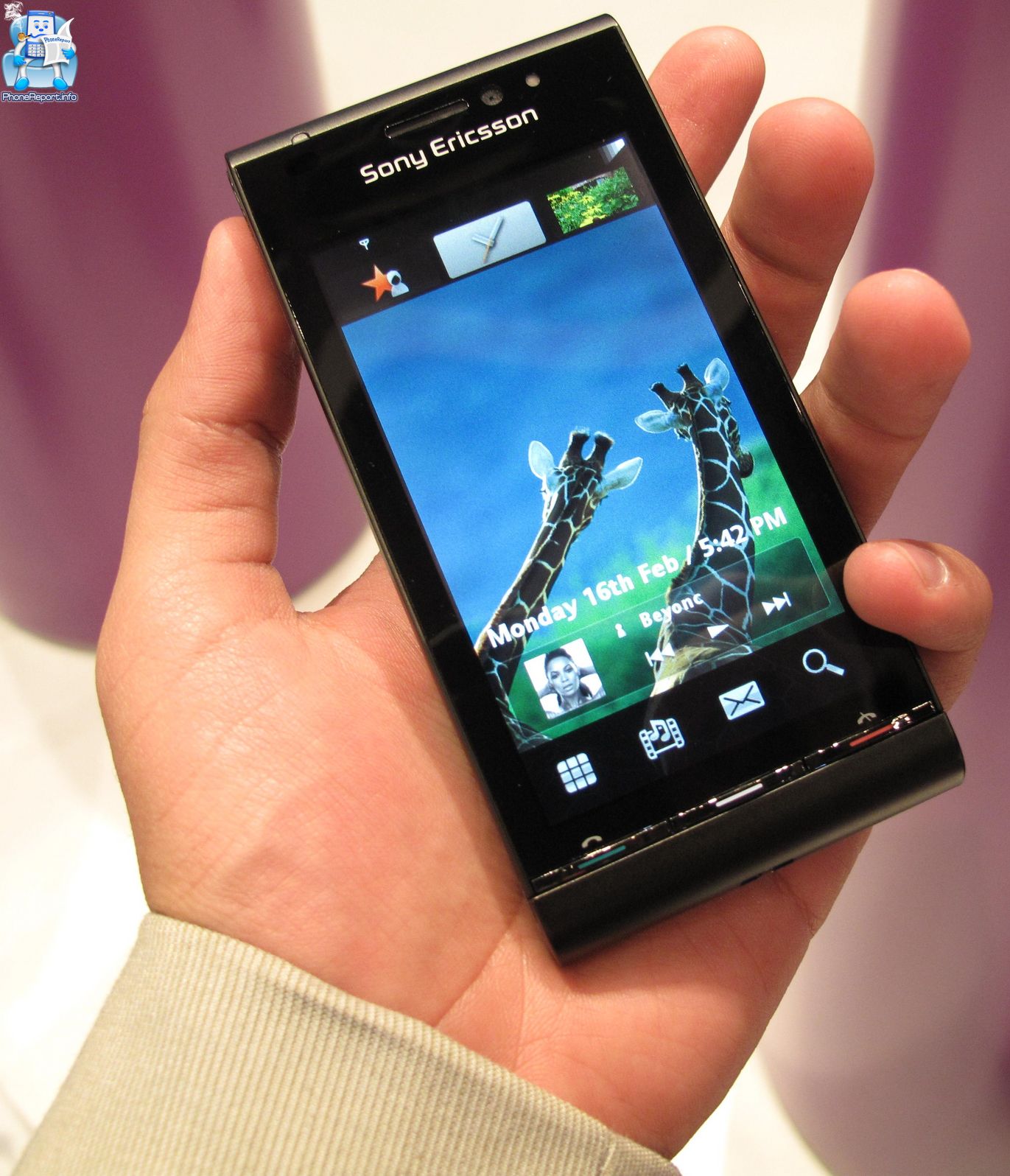
Sony Ericsson XPERIA X2


Live life in the fast lane with the XPERIA™ X2 from Sony Ericsson. Designed for those who always need to be connected, whether it’s for business or personal life, the XPERIA™ X2 blurs the boundary between work and play.


London, UK – September 2, 2009 – Today Sony Ericsson announces the XPERIA™ X2 a new Windows® phone that offers a best in class email and multimedia experience. In the modern world where 24/7 communication is key, users can instantly synchronise their mail and calendar and open and edit Microsoft® Office Mobile documents quickly and efficiently to stay connected with colleagues wherever they are.

The XPERIA™ X2 also includes the unique SlideView feature, which provides quick access to frequently used phone activities. Providing quick interaction with contacts, messages, media and more, SlideView gives an overview of missed incoming activity, notifying the user of any missed calls, e-mails and text messages so users don’t overlook an important contact.

With 14 specially designed preloaded XPERIA™ panels and 16 more to download, users can work with no boundaries with the XPERIA™ X2. From Skype, Mytopia and Google™, to games, CNN and Windows Live™, the panels ensure users are up-to-date with what matters most to them. With an improved touch interface and new 3D signature panel users also benefit from flexible desktop panels designed to categorise business, fun and communication features. Just set favourites to appear during certain times of the day and can get the latest news in the morning, YouTube™ at lunchtime and games for the journey home.

Powered by QWERTY messaging, Windows Mobile® users can even show their presentations on the big screen with the TV out cable - the XPERIA™ X2 makes a day at the office a walk in the park.

“In the fast moving world we live in, the need to stay connected has never been so important.” said Sumit Malhotra, marketing business manager, Sony Ericsson. “We constantly rely on our mobile phones as an extension to the office and the XPERIA™ X2 debuting with Windows Mobile® 6.5, allows users to work quickly and efficiently while on the move. The XPERIA™ X2 also features a new range of interactive panels as well as SlideView, which provides quick access to frequently used phone activities – perfect for those who need to see any missed incoming activity at a glance.”

Entertainment is not compromised on XPERIA™ X2. Enjoy amazing multimedia with the 3.2” high resolution touch screen and DVD quality and take advantage of the 8.1 megapixel camera to capture and instantly share experiences with friends and family. Personalise the panels and users can access Facebook™ to upload their party or holiday images and they can chat with friends across the world via Skype. Whether it is music, photography, email, video or gaming the XPERIA™ X2 has it all.

“Windows® phones allow people to manage their whole world – from work to home to play – on a single handset,” said Stephanie Ferguson, general manager, product management, Microsoft Corp. “The XPERIA™ X2 taps the powerful messaging and multimedia capabilities in Windows Mobile® so customers can be in touch, productive and entertained wherever they are.”

With the need to stay connected 24/7 Sony Ericsson has designed XPERIA™ Services, a bespoke and unique after sales package designed to help XPERIA™ X2 users get the most out of their mobile phone. With a specialised technical team standing by to support busy users and talk through the outstanding features the XPERIA™ X2 has to offer users can get help from troubleshooting to how to access their favourite websites. And if their XPERIA™ X2 stops working while they are abroad, XPERIA™ Services can replace the mobile phone via a simple phone call.
XPERIA™ Services really has been devised with the consumer in mind and to help consumers discover more about their XPERIA™ X2.

XPERIA™ X2
Live life without boundaries

  • Windows Mobile® 6.5 – work on the move easier
  • Make the most of the day – flexible desktop panels categorised for life: communication and fun, multimedia, business and internet
  • Work without boundaries – instant synchronisation of mail, calendar powered by QWERTY keyboard messaging and Windows Mobile®
  • Slide view – quick access to frequently used phone activities and overview of missed incoming activity
  • Present documents on the big screen – TV out cable
  • Never get stranded - XPERIA™ exclusive travel insurance
  • Enjoy amazing multimedia – 3.2” high resolution touch screen and DVD quality
  • 8.1 mega pixel camera with Photo light – easily upload images to web albums
  • Real 3D panel – 3D effects and zoom, music playback controls

Big business meeting? Arrive charged with the Car Charger AN300 – ultra fast, ultra-safe and ultra-reliable. A perfect accessory for the XPERIA™ X2, it charges 40 per cent faster than most car chargers – just plug into the cigarette lighter and go.

XPERIA™ X2 supports GSM/GPRS/EDGE 850/900/1800/1900 and UMTS/HSPA 850/900/2100. XPERIA™ X2 will be available in selected markets from early Q4 in the colours Elegant Black and Modern Silver.

The Sony Ericsson XPERIA™ X2 at a glance

XPERIA™ X2
Camera

  • 8.1 megapixel camera
  • Up to 16x digital zoom
  • Auto focus
  • Geo tagging
  • Image stabilizer
  • Send to web
  • Touch focus
  • Video light
  • Video recording

Music

  • Album art
  • Bluetooth™ stereo (A2DP)
  • Equalizer
  • Sony Ericsson media player
  • Music tones (MP3/AAC)
  • Equalizer
  • Sony Ericsson media player
  • Music tones (MP3/AAC)
  • PlayNow™ arena*
  • Stereo speakers
  • Windows Media® Player

Web

  • Bookmarks
  • Google™ search
  • Internet Explorer®
  • Pan & Zoom
  • Web feeds

Communication

  • Call list
  • Conference calls
  • Polyphonic ringtones
  • Speakerphone
  • Vibrating alert

Messaging

  • Email
  • Microsoft® Exchange ActiveSync®
  • Handwriting recognition
  • Instant messaging
  • Picture messaging (MMS)
  • Predictive text input
  • Text messaging (SMS)

Design

  • Auto rotate
  • Media
  • Picture wallpaper
  • Touchscreen
  • Wallpaper animation
  • Windows Mobile® 6.5

Entertainment

  • 3D games
  • Java™
  • Motion gaming
  • Tracker
  • Video streaming
  • Video viewing
  • YouTube™ application

Connectivity

  • A-GPS

Bluetooth™ technology

  • DNLA Certified™
  • Google Maps™
  • Modem
  • Synchronisation
  • TV out
  • USB mass storage
  • USB support
  • Wi-Fi™

Organizer

  • Adobe® PDF Reader
  • Alarm clock
  • Calculator
  • Calendar
  • Flight mode
  • Microsoft® Office Mobile
  • Notes
  • Phone book
  • Stopwatch
  • Tasks
  • Timer

Accessories
In-Box:

  • XPERIA™ X2
  • Battery
  • Battery Charger
  • Stereo Portable Handsfree MH500
  • USB cable
  • TV out cable
  • 4GB SanDisk microSD™ memory card
  • User guide

Optional accessories:

  • Bluetooth™ Headset PV740
  • Car charger AN300
  • Video Viewing Stand IM920

Facts and Figures 1)2)

  • Size: 110 x 54 x 16 mm
  • Weight: 155 grams
  • Colours: Elegant Black, Modern Silver
  • Main screen: 65,536 colour TFT
  • Resolution: 480 x 800 pixels (WVGA)
  • Size: 3.2 inches
  • Phone memory: Up to110MB
  • Memory card support: SanDisk microSD™ and microSDHC™, up to 16GB
  • Talk time GSM: Up to 10 hrs
  • Standby time GSM: Up to 500 hrs
  • Talk time UMTS: Up to 6hrs
  • Standby time UMTS: Up to 640hrs
  • Music listening time: Up to 20hrs

Availability and versions
Networks:

  • XPERIA™ X2
  • GSM/GPRS/EDGE 850/900/1800/1900
  • UMTS/HSPA 850/1900/2100
  • GSM/GPRS/EDGE 850/900/1800/1900
  • UMTS/HSPA 900/1900/2100
Available in selected markets from early Q4 2009.

Legal

1) Facts and features may vary depending on local variant.

2) Talk and standby times are affected by network preferences, type of SIM card, connected accessories and various activities e.g. games. Kit contents and colour options may differ from market to market. The full range of accessories may not be available in every market.

© Sony Ericsson Mobile Communications AB, 2009.

The Liquid Identity logo, PlayNow and TrackID and are trademarks or registered trademarks of Sony Ericsson Mobile Communications AB. Sony is a trademark or registered trademark of Sony Corporation.
Ericsson is a trademark of Telefonaktiebolaget LM Ericsson.
The Bluetooth word mark and logos are owned by the Bluetooth SIG, Inc. and any use of such marks by
Sony Ericsson is under licence.
TrackID is powered by Gracenote Mobile MusicID. Gracenote and Gracenote Mobile MusicID are trademarks or registered trademarks of Gracenote, Inc.
Google, Google Maps and YouTube are trademarks or registered trademarks of Google, Inc.
Wi-Fi is a trademark or registered trademark of the Wi-Fi Alliance.
microSD is a trademark or registered trademark of SanDisk Corporation.
XHTML is a registered trademark of the W3C.
Microsoft, Windows, Windows Mobile, Excel, PowerPoint, Windows Live, Outlook, Internet Explorer, Windows Media and ActiveSync are either registered trademarks or trademarks of Microsoft Corporation in the United States and/or other countries.
Adobe and Flash Lite are trademarks or registered trademarks of Adobe Systems Incorporated in the United States and/or other countries.
SyncML is a trademark or registered trademark of Open Mobile Alliance Ltd.
Java and all Java based trademarks and logos are trademarks or registered trademarks of Sun Microsystems, Inc. in the U.S. and other countries.
Facebook is a trademark or registered trademark of Facebook, Inc.
Skype is a trademark or registered trademark of Skype Limited.
CNN is a trademark or registered trademark of Cable News Network, LLP.
All other trademarks and copyrights are the property of their respective owners.

Sony Ericsson is a top, global industry player with sales of around 97 million phones in 2008. Diversity is one of the core strengths of the company, with operations in over 80 countries including manufacturing in China and R&D sites in China, Europe, India, Japan and North America. Sony Ericsson was established as a 50:50 joint venture by Sony and Ericsson in October 2001, with global corporate functions located in London.

Wednesday, August 22, 2007

Sony Ericsson W880i


By Reuben Lee, CNET Asia

Sony Ericsson has finally jumped onto the thin-phone bandwagon when it launched its first sub-10mm Walkman phone, the W880i, a week before the 3GSM World Congress in February. (The company offered sneak peeks of the handset earlier in January during the CES tradeshow in Las Vegas.) What's impressive about Sony Ericsson's new offering, however, is not just its thin profile. Like the Samsung Ultra Edition 8.4, the W880i comes with an extensive feature set that includes 3G, 2-megapixel camera, expandable memory card slot and Bluetooth stereo support. It is currently available for S$788 (US$518.96) with a two-year contract and S$888 (US$584.04) for just the handset.

Design
At 9.4mm, the W880i is possibly Sony Ericsson's slimmest phone so far and ranks among the thinnest 3G candy bars in the cellular market today. The Samsung Ultra Edition 8.4, which is currently one of skinniest 3G candy-bar phones, measures 1mm thinner, but sports a slightly wider and longer footprint..

Despite its thin form factor, the W880i feels solid, thanks to its sturdy construction and stainless steel front cover. The rubberized finish used for the rear casing also provides a firm grip, a thoughtful feature for slim models since there's a greater tendency to slip. Overall, we found the W880i lightweight at 71g and slim enough to slip easily into tight pockets.

Like most Walkman phones, the W880i is designed to stand out from the conventional grey or black handsets with its bright colors. The unit loaned to us, which sports the trademark orange and black tones, will appeal to those who want an eye-catching mobile. Those who fancy more subtlety and elegance will find the silver-grey edition more attractive.

Our biggest gripe with the W880i is probably its tiny keypad. Smaller than even the size of a rice grain, the buttons are not only hard to press, the sharp edges of the keys can be painful when texting for prolonged periods. Placing the buttons close together doesn't help matters, either, particularly for those with big digits.

We had similar issues with the navigation and various softkeys, which are a tad too small for comfortable use. On several occasions, we hit wrong buttons while scrolling through the menus, which added to the frustration. Nor did we like the tiny rocker switch on the right side panel as this requires a bit of dexterity to use for adjusting the volume or zooming into an image. For all their size, the Walkman and camera buttons on the sides proved surprisingly responsive, possibly because they are single buttons.

The W880i comes with two cameras: A primary 2-megapixel camera behind the LCD display and a second lens just beside the earpiece for video calls. We like that the Memory Stick Micro slot is located along the edge which allows for easy accessibility.

As with many other Walkman handsets, the charging port at the bottom left side of the phone multitasks as the connector for the wired handsfree headset as well as the USB cable. Previously, this meant users could carry out only one of the three functions. However, with the new dual connector on the AC adapter, you can either hook up to the handsfree headset or the USB cable while charging the phone.

The standard bundle of the W880i includes a USB cable, handsfree headset, AC adapter, 1GB Memory Stick Micro card as well as manuals and software CD.

Features
We can't help but notice the various similarities between the W880i and the Samsung Ultra Edition 8.4. Both candy-bar sets are slim and come with 3G capabilities. Each sports a 2-megapixel camera, expandable memory and Bluetooth stereo support. Sadly, both handsets also lack FM radio, which would have given users an alternative music source other than the onboard MP3 player.

There isn't a whole lot of manual controls in the 2-megapixel camera, save for the standard white balance, filter effects as well as options for multiple and panoramic shots. In shooting mode, the phone has to be held horizontally like a regular camera, making use of the full LCD display for viewfinder and image viewing.

The key feature of the W880i, however, is still its digital music player which is easily accessible by pressing the tiny Walkman button on the right. It runs the Walkman 2.0 player which can be found on the newer Sony Ericsson handsets such as the W850i and the recently unveiled W660i. The second-generation music player features an updated, more user-friendly interface that allows users to add album clipart and manage playlists. It also adds stereo widening, visualization and skin effects on top of the equalizer and play mode functions. We like that the player allows you to run music in the background while performing other tasks such as SMS texting or surfing the Web, unlike the Samsung Ultra Edition 8.4.

We were slightly disappointed to find HSDPA missing from the W880i's feature list, particularly since other major players such as Motorola and Samsung have already announced HSDPA offerings. However, most users will still find the Walkman phone fairly well-equipped with 3G, Bluetooth (with A2DP stereo profile) and USB. Also supported on the handset are Picture Blogging, PictBridge and Java MIDP 2.0. The flight mode can be activated when using the phone on a plane.

Sony Ericsson is including a 1GB Memory Stick Micro media with the W880i as a standard bundle. This should easily store around 250 MP3 files and more than 1,000 2-megapixel images, which should be more than sufficient for most users.

The W880i uses the Access NetFront Web browser for surfing the Web and supports RSS feeds as well as OMA DRM 2.0 for music downloads. There's also TrackID which is a music recognition application. All a user needs to do is record a few seconds of the song and send it to the Gracenote database. The song, artist and album name will be sent to the phone in a few seconds.

Performance
We tested the W880i in various locations around Singapore and found the call quality and reception generally good. The speakerphone volume was tad too soft at times, but the other party had no issues with the voice quality.

During tests, we were able to get around on two days of moderate use before the 950mAh Lithium-polymer battery powered down. Do note that for frequent use of 3G and Bluetooth, the battery life will expectedly be shorter.

Even without an autofocus function, the onboard 2-megapixel camera took pretty decent pictures when used outdoors during the day, but like most camera-phones in the market, the image quality suffered for low lighting and night shots. It didn't help that there was no built-in LED light to illuminate nearby objects. We didn't find any self-portrait mirror on the W880i, either. Video captures turned out relatively grainy but smooth.

When we played music through the speakers, the sound volume was loud but the audio quality was somewhat tinsy. The music sounded much better when we hooked the phone up to the bundled wired headset. We had no problems pairing and using the W880i with the Sony Ericsson HBH-DS970 Stereo Bluetooth Headset.

Images generally appeared sharp and bright on the 1.8-inch QVGA LCD screen which is capable of displaying up to 262,000 colors. At its brightest setting, the screen was viewable under direct sunlight.

Rating: 7.7 out of 10
The good: Slim, attractive design; solid build quality; bundled with a 1GB memory card; 3G; loud speakers; sharp image captures.

The bad: Camera lacks autofocus and flash; buttons are too small; no FM radio; tinny sound quality.

The bottom line: The W880i is slim, sexy and surprisingly packed with features. If you can look past its tiny keys and tinsy sound, this is one music-phone that's worth a closer look.

Phone

Phone type Triband

Networks GSM 900, GSM 1800, GSM 1900

Connectivity options 3G, GPRS, Java, Bluetooth, A2DP, USB

Calling Features Video calls

Physical design

Form factor Candy bar

Dimensions (W x D x H) 103 x 46.5 x 9.4 mm

Weight w/battery 71 g

Primary display type TFT

Secondary display type None

Secondary display resolution x pixels

Interchangeable covers? No

Available colours Black-orange and silver-black

General

LCD display size 1.8-inch QVGA TFT

Color LCD? Yes

Primary Display Color 18 bit

Performance

Operating system Others

Battery type(s) supported Rechargeable 950mAh Lithium-polymer battery

Max. talktime (in hours) 6.5 hours

Max. standby time (in hours) 425 hours

Internal memory 16 MB

Expansion slot(s) Memory Stick Micro

Included accessories

1GB Memory Stick Micro card; USB cable; AC adapter; stereo handsfree headset; user manual and software CD

Other Features

Additional functions

Picture blogging; PictBridge; Face warp application; flight mode; IM; full HTML browser with RSS; USB mass storage; PC synchronization; second VGA camera for video calls

MMS? Yes

Predictive text input? Yes

Polyphonic? Yes

Built-in vibrate alert? Yes

Games QuadroPop

Multimedia

Built-in digital camera? Yes

Maximum camera resolution 2 megapixels

Warranty

Base warranty 1 year


Tuesday, August 21, 2007

Samsung Ultra Edition 8.4


By Reuben Lee

In the past year, Samsung has built a strong reputation for featuring some of its slimmest handsets in its Ultra Edition series. The new Ultra Edition 8.4 (a.k.a. SGH-Z370) is no exception. Touted as the thinnest 3G phone in the world during its initial European launch in August 2006, the 8.4 improves upon the Ultra Edition 6.9 with several key enhancements, including 3G connectivity, dual cameras and an expansion card slot. The extra features do add slightly to the bulk of the handset, but frankly you'd be hard-pressed to find another phone that's as slim and feature-rich as the 8.4.

Design
Like previous Ultra Edition phones, the number in the model name denotes the thickness of the handset. Thus, in the case of the Ultra Edition 8.4, the mobile measures just 8.4mm. While it may not be as thin as its Ultra Edition 6.9 predecessor, we like that it feels a lot less flimsy. Combined with the solid build quality of the handset, we certainly had no qualms when putting the 8.4 in the back pocket, unlike the 6.9 which somehow felt like it would break under stress.

To better differentiate the new trio of 3G Ultra Editions from the first-generation lineup (unveiled during CommunicAsia 2006), the 8.4 will be offered in silver. This is a conservative yet refreshing change from the black in the original series and should appeal to the mass market audience. That said, there are just too many silver handsets in the market today. Given a choice, we hope to see the 8.4 being introduced in more vibrant colors.

Aesthetics-wise, Samsung adopts a plain-looking yet functional approach for the 8.4, with its design modeled closely after the 6.9. The phone follows a flat, wide footprint, with buttons and connectors on both sides. The microSD card expansion slot can be accessed from the right side and comes with a plastic cover to keep out the dust and dirt. The 1.9-inch landscape display makes it easier to read messages.

Buttons on the keypad are generally well-spaced and large enough for comfortable typing. Compared with the 6.9, Samsung has added two extra keys on the 8.4 for video calls and quick function switch just above the call and end call buttons, respectively. The center navigation button to access the Internet will take some getting used to as it is instinctively a menu button for many other phones.

To enable 3G video calls, the 8.4 comes with a VGA camera right above the TFT screen and a 2-megapixel sensor on the rear. The back camera is aligned with a self-portrait mirror plate on a flat surface that juts out slightly from the rest of the back cover. It's great for taking pictures as it is designed so your finger doesn't block the lens. This design, though, puts the glass at greater risk of being scratched.

For such a thin phone with limited real estate, we're surprised that Samsung still manages to squeeze in a small hook for hanging phone straps and other dangly accessories.

Our main design gripe lies with the phone's 3-in-1 connector. The single port is used to hook up to a wired headset, USB cable and charger, a setback as it means you can perform only one of the three tasks at any one time.

Features
It's amazing what mobile manufacturers pack into handsets these days, particular for ultra-thin models like the 8.4. Besides a 2-megapixel camera, the Samsung packs a video recorder/player as well as a music player. Its onboard document viewer application also lets you read your document files on the phone, a nifty tool for those who want to remain productive while on the daily commute.

The biggest enhancement the 8.4 has over the 6.9 is really the addition of an onboard memory card slot. This not only provides a convenient option to transfer data in and out of the mobile, it also doesn't cap the storage space available since more microSD media can always be purchased.

The 8.4 comes with the standard array of connectivity options including 3G, Bluetooth and USB. It also supports Java games and has a basic set of PIM applications for simple organizer tools. There's an onboard browser for surfing the Web, too.

This is not a music-phone, so naturally you won't find features such as dedicated music playback controls and 3.5mm audio jack, although those will be nice to have in future editions. What the phone offers, though, are stereo Bluetooth (A2DP) support, playlist creation and a built-in digital power amp that does improve the sound from the onboard speakers.

It's a pity the phone doesn't come with an FM radio. Nor is there a flashlight on the camera, which would have doubled as a handy torch.

Performance And Battery Life
We tested the Ultra Edition 8.4 extensively throughout a two-week period and didn't encounter any problems with reception or voice call quality. We liked that the volume on the earpiece could be adjusted louder such that we were able to hear the other party even on the noisy underground and bus stops. In 3G speakerphone mode, both parties could also be seen and heard clearly.

We were neither impressed nor disappointed with the sound reproduction from the speakers, although the relatively loud volume range came through on the phone. In terms of image quality, most of the pictures displayed relatively good color accuracy and sharpness compared with other camera-phones tested. However, night shots, as expected, turned out blurry and pixilated.

As with all small phones, there's always a tradeoff. For the Ultra Edition 8.4, the shortcoming is with the small battery. On average, the cell lasted us for about two days based on moderate usage. This should suffice for most folks, but if you are a heavy user and plan to employ more of the 3G applications such as data transfer and video calls, one can reasonably expect the battery to run even shorter. Unfortunately, unlike the 6.9, the 8.4 will not come with an additional battery. So you may have to factor in the cost of an extra battery when purchasing this phone.

Rating: 8 out of 10
The good: Slim, sleek design; 3G; microSD card expansion slot; supports Bluetooth stereo; 2-megapixel camera; solid build quality; vibrant display.

The bad: Average battery life; no FM radio; no second battery (like the Ultra Edition 6.9); one port for charging, earphone and USB; exposed lens design.

The bottom line: Samsung's latest 3G handset will appeal to those who want an ultra-slim phone but aren't willing to compromise on functionality.

Phone

Phone type Triband

Network GSM 900, GSM 1800, GSM 1900

Connectivity options 3G, EDGE, GPRS, Java, Bluetooth, USB

Ringtone options MP3 ringtones

Calling Features Video calls, Speakerphone

Phonebook capacity 1000-entry phonebook

Physical design

Form factor Candy bar

Dimensions (W x D x H) 112 x 50 x 8.4 mm

Weight w/battery 71 g

Primary display type TFT

Secondary display type None

Secondary display resolution x pixels

Interchangeable covers? No

Available colours Silver

General

LCD display size 1.9-inch; 220x176-pixel screen

Color LCD? Yes

Primary Display Color 18 bit

Performance

Operating system Others

Internal memory 20 MB

Expansion slot(s) TransFlash / microSD

Included accessories

AC adapter, USB cable, wired handsfree headset, user manual and installation CD-ROM

Other Features

Additional functions Document viewer; offline mode; uSearch

MMS? Yes

Predictive text input? Yes

Polyphonic? Yes

Built-in vibrate alert? Yes

Games Java games

Multimedia

Built-in digital camera? Yes

Maximum camera resolution 2 megapixels

Warranty

Base warranty 1 year


Samsung Ultra Edition 12.1 (U700)


By Damian Koh

Features
The U700 is one of those phones that manage to look fashionable, yet still pack a punch of features. The triband handset is equipped with HSDPA for fast data transfer and Bluetooth stereo (A2DP). It would have been a bonus if there's Wi-Fi, though. Onboard memory is limited to 20MB, but there's a microSD expansion card slot for the flash media.

Looking at the user interface, the U700 is very much similar to the recent Samsung mobiles. Although it is attractive, it can be long-winded at times, requiring multiple presses to perform simple tasks such as sending a text message. Even with the nifty rotary wheel for scrolling, we still stuck with the directional control most of the time. Both worked fine, but clicking the wheel provided a more "precise" control over the speed of the scroll.

For those whose memory is capable of retaining only the first few digits of their friends' mobile numbers, the search function on the U700 is a godsend. As we gradually typed out the numbers, the phone would show the contacts with corresponding digits so we could skip to the correct entry immediately. It's also helpful as a shortcut for those too lazy to go through the phonebook.

The 3.2-megapixel autofocus camera gave us average-quality images. Honestly, we expected more. Our pictures lacked punch in the colors and tended to underexpose. The shutter button on the right edge of the phone had to be held in a horizontal position for a better grip. The usual settings such as flash, timer, color effects are organized under a shortcut tab, while other options such as metering and picture quality are in a separate menu. Thanks to this, it took us more keypresses to get to certain functions, which was frustrating at times.

One other thing to note is that when shooting at maximum resolution, digital zoom is not available. Besides the main shooter, there's also a secondary front-facing camera for 3G video calls. We were rather disappointed the camera recorded video in 176 x 144-pixel QCIF resolution, which is unbecoming for a phone of this caliber.

In terms of multimedia, the onboard music player was able to sort our tracks by artists, genres, albums, composers. We also had the option to create playlists. When the music was playing in the background, the artist information and song title would appear as scrolling marquees on the home screen. The rotary wheel actually made itself very useful here by making fast-forwarding or going backward a track a smoother process. Unfortunately on this Samsung, there's no FM radio.

One thing the U700 can't handle is multitasking. For example, the music player would pause when we activated the camera. Fortunately, after we exited the camera, our music continued where we left off.

Performance
Call quality was generally crisp and loud. However, volume dipped when we switched to the onboard speakers. Although this wasn't a major issue, 3G video calling when we were outdoors was trying as it was nearly impossible to hear what the other party was saying.

The 900mAh battery life was decent for something that's so slim and lasted us just over two days on a single charge. Samsung rates the U700 for 3 hours of talktime and up to nine days on standby.

Rating: 7.3 out of 10
The good: Slim and trendy design; solid build quality; HSDPA; Bluetooth stereo; hot-swappable microSD expansion card slot.

The bad: Not everyone will like the touch-sensitive keys; LCD washes out in sunlight; onboard speaker volume a tad soft; 176 x 144-pixel video recording.

The bottom line: The Ultra Edition 12.1 is not only stylish and fashionable, it comes with a decent feature set, too. But the handset is not without its flaws.

Nokia 6120


By Damian Koh

The Nokia 6120 classic is probably one of the many mobile phones that most people would assume is a low-end handset. We had the same thought, too. What's not apparent at first glance is that the nondescript handset is, in fact, equipped with quite a few features. While most users probably won't fall in love with this candy-bar smart phone, we don't think anyone would call it ugly, either. Unlike the E- or N-series devices which have specific target markets, the midrange 6120 classic is aimed at the masses.

Design
Frankly, the design of the 6120 classic is like what its name suggests--classic. It's unpretentious and is nothing more than a rectangular candy bar with a screen and some buttons. Put the two together and you'll get a phone. The Finnish company has flashier models and this is definitely not one of them.

At best, this Nokia looks vaguely like the trendier DVB-H-enabled N77 with a glossy black fascia and matte-silver circumference. Both the front and back sport similar surfaces, so be prepared to wipe the rear estate often if you're picky about the fingerprint database.

Initially, we kept mixing up the menu and correction keys for the left/right soft controls. It became a non-issue only after a few days of use. We were also skeptical about the flimsy alphanumeric keys which appeared to be similar to the ones on the Sony Ericsson W960i. Again, the good tactile and responsive feedback changed our minds.

It could be just our review unit, but the battery cover didn't seem to stay firm after it was locked into place. That wasn't a big issue although it was mildly irritating to feel irksome.

Features
By making it unassuming in terms of looks, it is actually "beyond expectations" to find HSDPA (3.5G) connectivity on this quadband handset that's powered by the robust Symbian S60 platform. The smart phone also comes with Bluetooth stereo A2DP and mini-USB port connectivity options.

For expanded memory, the microSD card is hot-swappable from the left edge of the phone. The door to the flash media is not spring-loaded, so it stays in place after opening it. We're not too sure whether the hinge will loosen over time, though. The 6120 comes with 35MB of built-in memory and Nokia ships commercial units with a 256MB card.

One thing we're couldn't convince ourselves was surfing the Web via HSDPA on the 2-inch QVGA screen. It's fine for short occasional Web browsing, but prolonged viewing will probably result in some eye-squinting or a less than immersive experience.

The 2-megapixel camera took average-quality photos and the onboard LED photolight helped when we were shooting in low-light environments with our subject in close proximity. What it lacked was autofocus, a feature which is commonplace on Sony Ericsson Cyber-shot models and just as important as a built-in photolight. Besides the main shooter, there's also a front-facing camera for 3G video calls.

We also liked the 2.5mm audio jack on the 6120 although a 3.5mm-size one would be preferable for external headsets. That said, at least it is easier to find a 2.5mm-to-3.5mm connector than one to match a proprietary port.

Performance
Nokia rates the handset for 3.1 hours of talktime and 9.5 days on standby. In actual use of making calls, sending text messages and listening to music via A2DP daily during commute, the battery trudged on for just over two days before it gave up. Call quality was good and the onboard speakers were relatively loud. It helped that the latter is well-placed on the side of the handset instead of on the back, so we were able to hear the caller who was on the other end of the video call relatively clearly.

Rating 7.7 out of 10

The good: Series 60 platform; HSDPA; Bluetooth stereo; mini-USB port; 2.5mm audio jack.

The bad: Fingerprint database; no autofocus for camera; 2-megapixel image quality not impressive.

The bottom line: If you're hunting for an inexpensive 3G/HSDPA handset equipped with an overall decent set of features, this is it.